
12 Best Things to Eat at Oktoberfest (2026 Guide)
Explore our 2026 Oktoberfest food guide. Discover traditional Bavarian dishes, 2025 menu prices, and tips for finding the best roast chicken and pork.
On this page
Oktoberfest Food Guide: 12 Essential Things to Know (2026)
After five visits to the Munich grounds, I know the Oktoberfest menu inside out. Our editors updated this guide in April 2026 for total accuracy. The 2026 festival brings more variety than ever before. Traditional meat remains king, but vegan options are growing fast. This oktoberfest food guide covers every essential bite, from tent pricing to street stalls, and how to order in German so you don't end up with soup when you wanted sausage.
You should prepare for high prices and massive portions. Budget at least €50 per person daily for food and beer. Planning your meals helps you avoid the worst tourist traps. Eat early to find the freshest food and avoid rowdy evening crowds.
Essential Bavarian Meat Classics: Hendl and Schweinshaxe
The **Wiesn-Hendl** (roast chicken) is the true heart of the festival. According to the Oktoberfest.de official magazine, over 500,000 chickens are eaten annually. Every major beer tent serves golden roast chicken with crispy skin, making it the festival staple. The saltier the skin, the better. Most tents use a secret spice rub for flavor. Expect to pay €17–€25 for a half-chicken depending on the tent. Servers pedal these out like clockwork at all hours of the festival.
The **Schweinshaxe** (roasted pork knuckle) is the heavy hitter of the menu. This massive knuckle features very salty, crackling skin and tender meat underneath. The skin must be loud and crispy. Chefs roast them for hours to ensure tenderness. One knuckle can easily feed two moderate eaters. Budget €24–€29 for a full plate. Most tents serve this with potato dumplings and red cabbage. Quality varies by time of day. Meat served at noon is often the freshest. Late-night portions might sit under heat lamps longer. Always look for steam rising from the plate.
Best value: **Augustiner-Festhalle** (€17.20 for Hendl, €24.90 for Schweinshaxe). Best premium experience: **Käfer Wiesnschänke** (€23.50 for Hendl, €45.50 for duck—the tent beloved by celebrities).
Must-Try Sausages: From Weißwurst to Currywurst
**Weißwurst** (Bavarian white sausage) is the traditional breakfast sausage choice. This pale, delicate sausage is made with veal and pork. Eat these only before the noon bells—serving them after is a huge faux pas. Peel the skin before eating the meat using a lengthwise cut, then eat the filling. Pair it with sweet mustard and wheat beer. The entire experience is quintessentially Bavarian. Most tents charge €13–€17 for Weißwurst. Find it on the breakfast menu served warm in mustard-drenched bowls.
**Currywurst** (curry-dusted sausage) is not Bavarian but seriously so good. Usually one of the cheaper offerings, a Currywurst costs €7–€12 and comes doused in curry ketchup and curry powder, typically served with a hot pile of fries. It is not fancy by any means, but it does the job deliciously and is perfect after a few beers. Most tents now offer it on their casual menu alongside other street-food fare.
Other sausage varieties abound: **Bratwurst** (pork sausage), **Leberwurst** (liver sausage), and **Blutwurst** (blood sausage) are common sides to heavier meals. Street stalls sell sausage sandwiches for €7–€9, making them an affordable entry point to Oktoberfest dining.
Vegetarian and Vegan Survival Guide
Vegetarians no longer have to eat just bread. Every major tent now offers at least one substantial vegetarian main. **Käsespätzle** (cheese noodles) remains the most popular meat-free choice. These egg noodles are smothered in sharp mountain cheese and topped with caramelized onions. It is the best vegetarian main dish at Oktoberfest. Expect to pay €13–€24 per portion depending on the tent. This Bavarian take on mac and cheese is comfort food at its finest.
Vegan options have expanded significantly since 2024. You can find vegan **Currywurst** at several stalls. **Hofbräu tent** offers a plant-based soy steak. Check the menu icons for the green leaf. Many tents now stock dairy-free cheese spreads and lentil-based patties. **Obatzda** (the traditional camembert cheese spread) is vegetarian but not vegan. Red cabbage (**Rotkohl**) and potato salad are usually vegetarian as sides. Be careful with gravy on the dumplings. Traditional gravy often contains pork or beef stock. Always ask the server about vegetable stock options.
Sides can make a great meal on their own. A plate of **Kartoffelknödel** (potato dumplings), **Sauerkraut**, and roasted vegetables with olive oil runs €8–€14 and fills you up.
Savory Snacks: Pretzels and Obatzda
**Riesnbrezn** (giant pretzel) is an Oktoberfest classic. These pretzels are as big as human heads. Foamy beers and salt-studded pretzels are among the most stereotypical images of Germany for good reason—they go damn well together. Stalls sell them for €5–€7 each. They are available everywhere on the grounds. Salt levels can be very high here, so they pair perfectly with beer. Don't bother getting the small pretzels; you'll want one of the really big ones so you can slowly peck away at it while you down your beer. It's nice to get a few to share with friends at a table.
**Obatzda** (creamy cheese spread) is the perfect snack for groups. This spread mixes camembert with paprika spices, onions, and butter to create a creamy, savory dip. Buy a small tub for €9–€17. Spread it thickly on a fresh pretzel or dark bread. It is beer garden food at its finest. Most tents include it on their appetizer menu. One tub easily feeds 3–4 people sharing at a table.
These two items together—a giant pretzel and a pot of Obatzda—make the perfect light meal for those not ready for a full Hendl.
Hearty Sides: Knödel and Sauerkraut
**Kartoffelknödel** (potato dumplings) are bouncy balls that soak up meat gravy perfectly. These chewy dumplings have an addictive texture. They usually come as a side dish with roast meats. Cost is included with most Hendl and Schweinshaxe plates. The texture is chewy and very filling. Many locals prefer them to potatoes. They are also called **Serviettenknödel** (napkin dumplings) when made with bread.
**Sauerkraut** (fermented cabbage) is the traditional Bavarian vegetable side. It is sour, crispy, and cuts through the richness of roasted meats beautifully. Most tents include it on every main plate. It aids digestion after a heavy meal. The sauerkraut at Oktoberfest is always fresh, never from a can.
**Rotkohl** (red cabbage) is the other classic Bavarian side. This sweet and sour cabbage is slow-cooked with vinegar and apples. It balances the salt and grease of fried foods. Both sides are typically free with tent meals. Order a plate of just these sides and fresh bread for a light, healthy option (€6–€8).
Traditional Oktoberfest Desserts and Sweets
**Kaiserschmarrn** (shredded pancake) is Oktoberfest's most beloved dessert. This fluffy shredded pancake is dusted with powdered sugar and often includes rum-soaked raisins. Order it for €14–€27 depending on the tent. It is best for sharing after dinner. Request extra **Apfelmus** (apple sauce) on the side. One Kaiserschmarrn easily serves 2–3 people. The combination of fluffy pancake and tart apple sauce is a cozy hug for your taste buds. The **Café Kaiserschmarrn** tent (which looks like a giant gingerbread castle) specializes in this dessert.
**Dampfnudel** (steamed sweet buns) are another tasty Oktoberfest dessert. These buns sit in thick vanilla sauce and are a classic Bavarian comfort food. Stalls near the **Oide Wiesn** excel here. They are perfect for a cold or rainy afternoon. Cost is €7–€12 per serving. The soft dough absorbs the creamy vanilla sauce beautifully.
**Gebrannte Mandeln** (roasted almonds) are Oktoberfest's version of crack. They are so ridiculously addictive and delicious. The smell of cinnamon fills the air as you walk past the stalls. Small bags cost about €5–€7. Buy them from the colorful street stalls scattered across the grounds. Eat them while they are still warm for the best experience.
Why You Should Skip the Gingerbread Hearts (Lebkuchenherzen)
**Lebkuchenherzen** (gingerbread hearts) hang from every single stall in Munich. They look beautiful with their colorful icing messages. These cookies are designed for decoration and souvenirs, not eating. The dough is baked to be extremely hard. They can last for years without rotting away. This durability tells you everything about the taste. One tourist tip: they make excellent hanging decorations, but eating them is a genuine mistake. The icing is overly sweet, and the gingerbread is rock-hard.
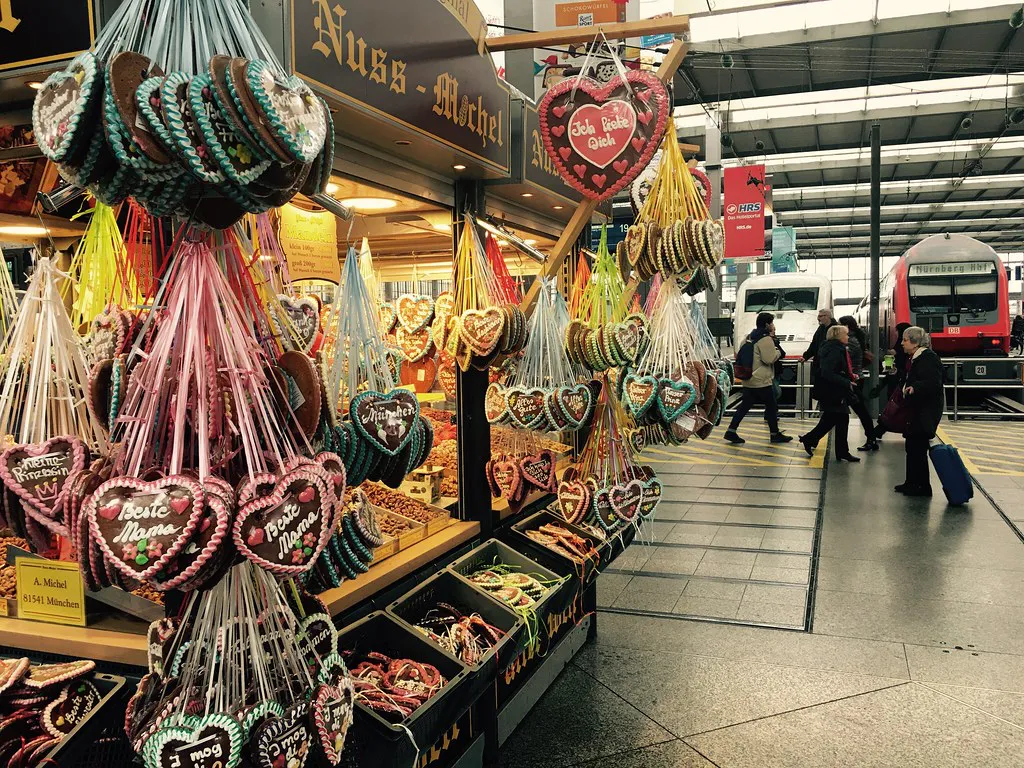
Save your money for the roasted almonds instead. **Gebrannte Mandeln** provide a much better flavor for less money. If you want a heart-shaped souvenir, hang it on your wall or give it as a gift. Do not expect a delicious snack from a Lebkuchenherz. This is a classic Oktoberfest tourist trap.
Tent vs. Street Food: Where to Eat
Understanding where to eat at Oktoberfest is crucial for managing your budget and experience. The Theresienwiese is divided into two distinct dining zones: large beer tents with sit-down service, and outdoor food stalls with quick counter service.
Tent Food (Sit-Down, Expensive): The large beer tents like **Hofbräu-Festzelt**, **Augustiner-Festhalle**, **Hacker-Festzelt**, and **Käfer Wiesnschänke** offer full table service. You can reserve seats, order from a menu brought to your table, and eat leisurely. Prices are highest here: €15–€45 per main dish. Tipping 10% is standard. Service is professional and efficient. You get cloth napkins and proper glasses. Most tents have live music and traditional Bavarian atmosphere. Open 10:00 AM to 11:00 PM daily.
Street Food (Quick, Cheaper): Outdoor stalls surround the tents and fill the pathways. You order at a counter, grab your food, and eat standing up or find a picnic bench. Prices are much cheaper: €5–€12 for most items. No tipping expected. Items include bratwurst sandwiches, roasted almonds, Obatzda with bread, pretzels, and Currywurst. These stalls are perfect for grazing throughout the day or eating between tent meals. No reservations needed. Many stalls close at midnight.
Best strategy: Reserve a tent table for your main meal (Hendl or Schweinshaxe), then snack from street stalls throughout the day. This maximizes experience while controlling costs.
Tent Specialties: Where to Find the Best Each Dish
Each major tent has a specialty. Knowing where to eat each dish gives you the best value and authentic experience.
Best for Roast Chicken (Hendl): **Augustiner-Festhalle** (€17.20, best value) or **Schottenhamel-Festhalle** (€17.80, traditional). Augustiner is the oldest brewery and uses the leanest chickens.
Best for Roasted Pork Knuckle (Schweinshaxe): **Käfer Wiesnschänke** (€38.50 for premium quality, celebrity favorite) or **Löwenbräu-Festzelt** (€29.20, good value). Käfer serves the fattiest, most flavorful knuckles but at highest prices.
Best for Fish (Steckerlfisch): **Fischer-Vroni** ONLY. This is the tent's exclusive specialty. Grilled fish on a stick is available nowhere else at Oktoberfest with the same quality. Look for the smoke plume near the entrance. Prices depend on fish weight (€18–€26). The smell is pungent but authentic.
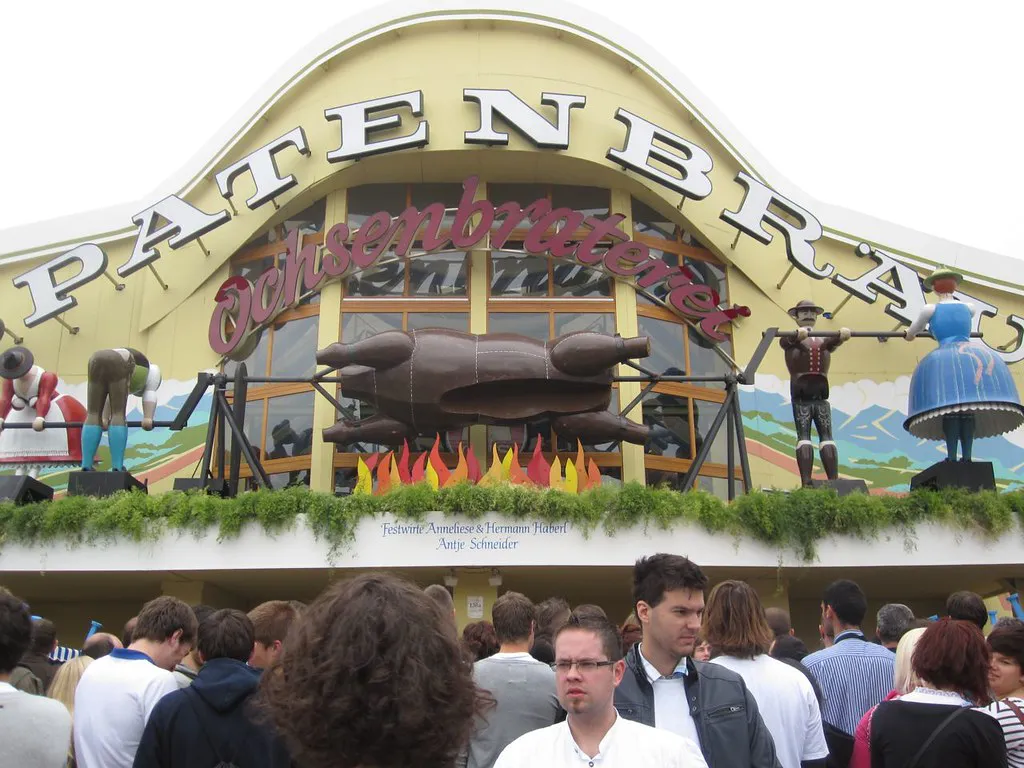
Best for Roasted Ox (Ochsenbraterei): **Ochsenbraterei tent**. Whole oxen roast on spits all day long. A plate costs roughly €26.20. Check the chalkboard for the ox's name—each day features a different ox. This is the only place at Oktoberfest serving ox as a specialty main.
Best for Cheese Noodles (Käsespätzle): **Käfer Wiesnschänke** (€21.50, premium quality) or **Augustiner** (budget-friendly). Both use sharp mountain cheese and generous portions.
Best Budget Options: **Augustiner-Festhalle** across all items (Hendl, Schweinshaxe, sausages all underpriced by €1–€2 vs. competitors). **Museumszelt** has the cheapest full meals (€11–€14) but smaller portions.
2026 Price Guide: What to Budget for Food
Inflation has hit the festival grounds quite hard in 2025–2026. Budget at least €50 per person daily. This covers one full meal, a snack, and beer. According to Oktoberfest-Guide.com, prices rise every summer. Service tips are often added to the final bill in tents.
2025–2026 Pricing by Category (from current tent menus):
Main Dishes: Half Chicken €16.90–€25.50. Pork Knuckle €22.90–€31.00. Duck €32.90–€45.50. Roast Pork €19.80–€38.50. Beer (½ liter) €14.50–€17.80. Spezi (Coke + Fanta) €11.00–€15.40. Käsespätzle €13.80–€24.90. Kaiserschmarrn €14.20–€28.50. Obatzda €9.80–€18.40.
Street Food (Much Cheaper): Bratwurst Sandwich €7–€9. Giant Pretzel €5–€7. Roasted Almonds (small bag) €5–€7. Obatzda + Bread €8–€12. Currywurst €7–€12.
Daily Budget Breakdown (per person): Main meal in tent €25–€35. Snack from stalls €7–€12. Beer (multiple glasses) €15–€20. Total: €47–€67. Carry cash in €10–€20 notes. Many tents now accept cards for bills over €20, but small stalls are cash-only.
Practical Tips: Lunch Specials and Payment
The **Mittagswiesn** is the best-kept local secret at Oktoberfest. On weekdays, many tents offer huge food discounts. You can save up to 30% before 3:00 PM (and sometimes until 5:00 PM). A half-chicken that costs €18 at dinner goes for €12–€14 at lunch. A Schweinshaxe drops from €28 to €19. Always ask the server for the lunch menu (Mittagsmenu). Weekday mornings offer the best deals. Weekends fill up quickly, so arrive by noon. This strategy lets you eat two full meals for the price of one evening meal.
**Cash vs. Card:** Cash is still king at the festival. Carry €200–€300 in mixed notes. Most large tents now accept cards for bills over €20, but expect a 2–3% surcharge. Small street stalls rarely have card machines. The ATMs on the grounds charge €3–€4 in fees. Plan ahead: withdraw money the morning you arrive or the night before from your hotel ATM.
**Tipping:** Expected for good table service in tents. Round up your bill to the nearest euro. Ten percent is a standard tip for servers. Happy servers ensure your beer stays full all day. No tipping required at street stalls or counter service.
**Reservations:** Book a tent table 2–3 weeks in advance if possible. Walk-ins can find seats 11:00 AM–2:00 PM or after 8:00 PM. Weekday mornings are quietest. Secure your oktoberfest 2026 tickets early to guarantee a seat.
How to Order in German: Food Cheat Sheet
Understanding key German food words helps you navigate busy servers and avoid confusion. Here is a quick cheat sheet for common Oktoberfest foods:
Meats & Main Dishes: "Ein Hendl, bitte" (A chicken, please) [HEN-dul]. "Ein Schweinshaxe" (A pork knuckle) [SHVINE-HAHKS-uh]. "Weißwurst" (White sausage) [VICE-voost]. "Bratwurst" (Pork sausage) [BRAH-twurst]. "Currywurst" (Curry sausage) [KUH-ree-voost]. "Käsespätzle" (Cheese noodles) [KAY-zuh-SHPET-zluh].
Sides & Appetizers: "Obatzda" (Cheese spread) [OH-baht-ZAH]. "Kartoffelknödel" (Potato dumplings) [kar-TOFF-ul-KNUR-dul]. "Sauerkraut" (Fermented cabbage) [SOW-ur-krout]. "Rotkohl" (Red cabbage) [ROHT-kohl]. "Eine Brezn" (A pretzel) [AY-nuh BRET-zun].
Desserts: "Kaiserschmarrn" (Shredded pancake) [KY-zur-SHMAR-un]. "Dampfnudel" (Steamed bun) [DAMP-foo-dul]. "Gebrannte Mandeln" (Roasted almonds) [guh-BRAH-tuh MAHN-dulz].
Beverages: "Ein Bier" (A beer) [ein BEER]. "Ein Wasser" (Water) [ein VAH-sur]. "Süßes Wasser" (Sparkling water) [ZOOS-us VAH-sur]. "Spezi" (Coke + Fanta mix) [SHPAY-tsee].
Useful Phrases: "Mit Senf bitte" (With mustard, please) [mit ZENF BIT-uh]. "Ist vegetarisch?" (Is this vegetarian?) [ist vay-guh-TAHR-ish]. "Wie viel kostet?" (How much does it cost?) [VEE feel KOS-tet].
Most servers speak English, but locals appreciate the effort to order in German. Speak clearly and smile. If you get it wrong, they will understand and help you.
Frequently Asked Questions
What is the most popular food at Oktoberfest?
The Wiesn-Hendl, or roast chicken, is the most popular dish. Over half a million are consumed each year. It is prized for its crispy skin and tender meat. The affordability (€17–€25) makes it accessible compared to pork knuckle (€25–€31).
How much does food cost at Oktoberfest 2026?
Expect to pay €15 to €45 for a main course in tents. Snacks like pretzels cost €5–€7. Budgeting €50 per person for food and drink daily is recommended. Street stalls are much cheaper (€7–€12) than tents.
Are there vegetarian options at Oktoberfest?
Yes, every tent now offers vegetarian and vegan dishes. Käsespätzle (cheese noodles) is the most common meat-free choice. Many stalls also sell vegan sausages, salads, and roasted vegetables. Obatzda is vegetarian but not vegan.
Eating at the festival is a sensory overload experience. The smell of roasted meat and sugar is unforgettable. Choose your tent based on your favorite specific dish and budget. Remember to wear your oktoberfest dress code guide outfits for the full vibe. Use the lunch special strategy to maximize your food budget on weekday mornings. Order in German where you can—locals appreciate it.
Don't forget to stay hydrated between your beer rounds. The food is salty and designed to make you thirsty. Street snacks and tent meals offer different experiences—mix both. Enjoy the tradition and the massive Bavarian portions. Prost and guten Appetit to all 2026 visitors!
 10 Best Budapest Christmas Market Food Treats for 2026April 21, 2026
 Best Munich Christmas Market Food Guide 2026April 21, 2026