
Experience Christkindlesmarkt Nuremberg: 2026 Guide
Visit the world-famous Christkindlesmarkt Nuremberg. Discover top foods, local crafts, and travel tips in our comprehensive 2026 holiday guide.
On this page
A Complete Guide to Christkindlesmarkt Nuremberg 2026
The air in Nuremberg fills with the scent of roasted almonds and spiced wine every late November. This medieval city transforms into a winter wonderland that draws millions of visitors from across the globe. The iconic christkindlesmarkt nuremberg is nestled within the historic Hauptmarkt square, one of Europe's oldest and most beloved holiday markets. This guide provides everything you need to navigate the wooden stalls, festive traditions, and practical logistics for your 2026 visit.
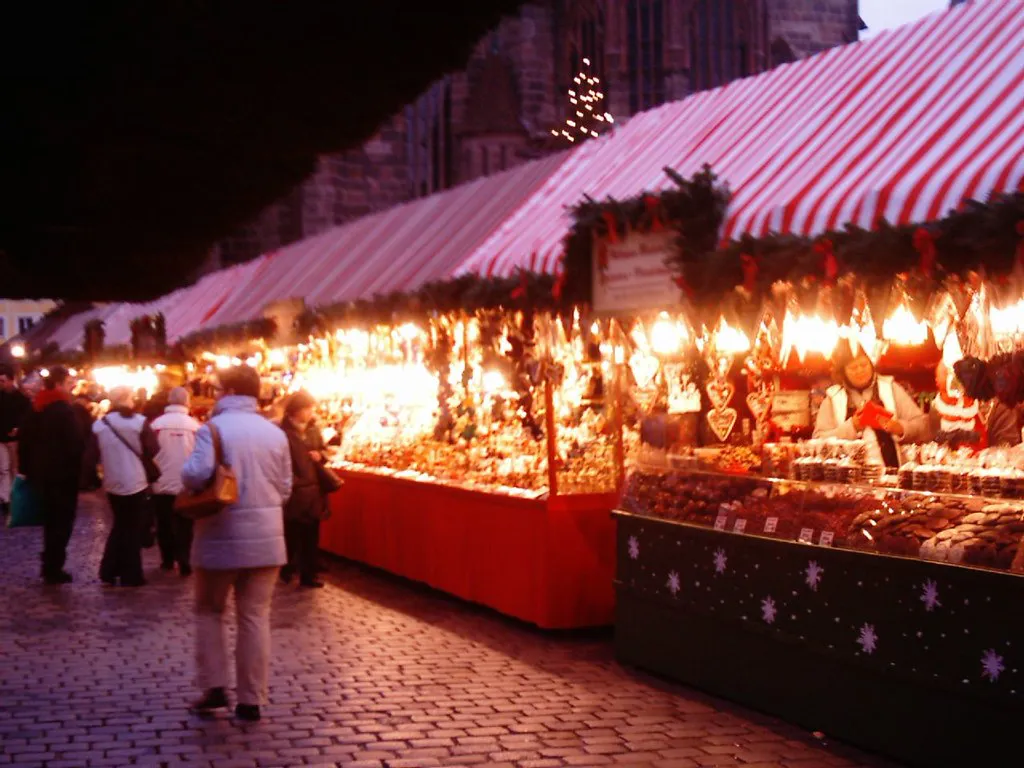
Dating back to 1628 as documented in archival records, and likely even older, the Christkindlesmarkt represents centuries of Franconian holiday tradition. More than 160 handcrafted wooden stalls topped with red-and-white striped canvas create a fairy-tale setting beneath the Gothic spire of the Church of Our Lady. Planning your visit requires timing and strategy to balance the magical atmosphere with manageable crowds.
Must-See Christkindlesmarkt Attractions and Traditions
The main market occupies the Hauptmarkt, a historic cobblestone square surrounded by medieval buildings and anchored by the stunning Frauenkirche, or Church of Our Lady. Built in the 14th century, this Gothic masterpiece provides a dramatic backdrop for the hundreds of traditional wooden stalls. Most of the stalls are constructed from regional spruce wood, and over thirty date back to 1890, making the physical architecture itself a living heritage.
The market earned its legendary status through centuries of tradition. Merchants still sell hand-made regional goods, maintaining strict quality standards that set Nuremberg's market apart from larger, more commercialized German Christmas markets. The emphasis on tradition over volume has made this a destination for those seeking authenticity rather than volume of choices. Walking through the cobblestone streets genuinely feels like stepping back into a 16th-century holiday celebration.
The Beautiful Fountain, or Schöner Brunnen, another Gothic landmark, sits at the heart of the market and serves as a natural gathering point. Local legend holds that touching the fountain brings good fortune. You will see visitors queuing to press their hands against its intricate carved figures, especially near opening day.
Cash remains the preferred payment method throughout most of the market, though an increasing number of vendors now accept cards. Dress in warm, layered clothing because the Bavarian winter air can feel biting after standing for extended periods. Sturdy, waterproof boots are essential for navigating the uneven cobblestones and potential slushy snow.
Essential Dates and Opening Hours for 2026
The 2026 Christkindlesmarkt opens on the Friday before the first Sunday of Advent, typically in late November. The market runs daily from 10:00 AM to 9:00 PM throughout December, closing on Christmas Eve at 2:00 PM. It is essential to verify the exact opening date with official tourism sources, as Advent timing shifts each year based on Easter calculations.
Arriving early on a weekday—particularly Tuesday through Thursday—helps you avoid the heaviest crowds. Peak season is December weekends and the week leading up to Christmas, when the square can feel overwhelming. Tour buses typically arrive in the late afternoon, so morning visits offer a more peaceful shopping experience and better photography conditions. The blue hour, right before sunset around 4:00 PM in December, provides the most magical glow for capturing the festive lights.
You should verify the nuremberg christmas market dates before booking your flights or train tickets, as the opening date shifts annually. Plan to spend at least three to four hours exploring the various sections and food stalls, or six to eight hours if you intend to visit all three market zones (main, children's, and sister cities markets).
The Opening Ceremony and the Nuremberg Christkind
The official opening ceremony takes place on the first Friday of the market season, with the Christkind appearing on the balcony of the Church of Our Lady to recite the traditional prologue. This young woman, elected every two years by public vote, wears an elaborate white gown adorned with gold leaf, a golden crown, and curled blonde hair. She becomes the symbolic face of the market throughout December.
Beyond opening day, the Christkind makes public appearances Tuesday through Friday at 3:00 PM at various locations throughout the market. She often interacts with children, signs autographs, and poses for photographs. Witnessing the opening ceremony is a highlight for many visitors, though the square becomes extremely crowded during the speech. Plan to arrive at least two hours early if you want a clear view of the church balcony.
The Christkind tradition dates back centuries in southern German culture and represents the Christ Child as the gift-giver, a role Santa Claus takes in northern Germany. In Nuremberg, this religious and cultural symbol has evolved into a beloved secular attraction that draws crowds of all backgrounds. Many families time their visits to meet the Christkind, making it one of the most memorable aspects of the experience.
Family-Friendly Fun at the Children's Christmas Market
The Kinderweihnacht, or Children's Christmas Market, is located at Hans-Sachs-Platz, just a short walk east of the main square. This dedicated area features a nostalgic carousel, a vintage merry-go-round, a small Ferris wheel, and hands-on craft workshops where children can decorate cookies or make candles. All stalls are designed at lower heights to make them accessible and engaging for young visitors.
Beyond shopping opportunities, the Kinderweihnacht hosts daily entertainment including storybook readings, some conducted in English, and special events throughout December. The Wishing Tree is a unique feature where children can take letters from local children's homes detailing their Christmas wishes, then purchase the desired gift directly from the market—allowing visitors of all ages to participate in spreading holiday cheer.
Visiting the Kinderweihnacht in late morning ensures a more relaxed pace for families. By late afternoon and evening, crowds from the main market spill over, and the children's section becomes busier. If you have young children, consider an early afternoon visit to this zone before moving to the main market for dinner and evening shopping.
The Sister Cities Market: A Global Festive Experience
Unique to Nuremberg is the Sister Cities Market, or Market of the Sister Cities, located on Rathausplatz, just north of City Hall. This market pays homage to Nuremberg's strong international trade links dating back to the Middle Ages. Merchants from around 20 of Nuremberg's twin cities set up stalls featuring regional specialties and traditional holiday goods from their home countries.
You will find an extraordinary variety of international goods and festive foods. Lavender honey from Provence, hot toddies from Scotland, salami and cheese from Italy, matryoshka dolls from Ukraine, and items from cities as diverse as Atlanta (USA), Kharkiv (Ukraine), Togo, and Shenzhen (China) create a truly global holiday experience. The Austrian stall often offers some of the shortest Glühwein lines of any market zone, and their regional mulled wine variations are worth sampling.
The Sister Cities Market offers a quieter atmosphere than the main Hauptmarkt, making it an excellent alternative if you find the primary zone overwhelming. The quality of goods here is exceptionally high, as vendors represent the official artisan communities of their home cities. This section provides a window into how different cultures celebrate the season, making it educational and culturally enriching alongside its shopping appeal.
Must-Eat Foods: Nuremberg Sausages and Lebkuchen
Nuremberg is famous for its small, spiced grilled sausages, known as Nürnberger Bratwurst, which have protected geographical indication status. These sausages must be produced within the city limits using a recipe documented as far back as 1497. They are smaller than typical German bratwurst—each sausage is roughly the size of your little finger and weighs about 23 grams. The local herbs, particularly marjoram, create a distinctive flavor profile.
You will most commonly see them served as 'Drei im Weckla,' meaning three sausages in a hard roll, often with mustard. This classic serving costs around four to six Euros and makes for a quick, satisfying lunch. For a more substantial meal, visit one of the designated bratwurst kitchens near the market: Zum Gulden Stern, the city's oldest bratwurst restaurant, or Bratwursthäusle on Rathausplatz. Both offer wood-paneled dining rooms and traditional preparations with local horseradish, known as kren.
Nürnberger Lebkuchen, the local gingerbread, has been produced in Nuremberg for over six centuries. The most prized variety is Elisenlebkuchen, which contains a high percentage of nuts and minimal flour compared to standard holiday cookies. These are distinctly different from the decorated icing cookies hanging from ribbons throughout the market—those are decorative and far less flavorful. The premium Elisenlebkuchen from established producers like Lebkuchen-Schmidt or Wolfgang Woitinek represent centuries of tradition and come in beautifully decorated tins perfect for gifting.
For a more affordable gingerbread option, look for the hanging iced varieties, which cost two to four Euros. However, serious gingerbread enthusiasts should seek out the tins, which range from eight to twenty Euros depending on size and ingredients. Buying a tin of authentic Nürnberger Lebkuchen is the quintessential souvenir for anyone with a sweet tooth.
Festive Drinks: GERSTACKER Blueberry Glühwein and More
Glühwein, or mulled wine, is the quintessential drink of the market and is served in beautiful, dated ceramic mugs that change design each year. You pay a small deposit (typically two Euros) for the mug, which you can return for a refund or keep as a collector's souvenir. The annual design has become a beloved tradition, with collectors seeking out specific years.
The local specialty is the GERSTACKER Blueberry Glühwein, made with heidelbeeren, or blueberries. The family-run GERSTACKER producer has been supplying this signature variation to the Nuremberg market for over thirty-five years. The blueberry flavor naturally sweetens the wine and overpowers the bitterness of tannins, creating a smoother, more approachable drink than standard spiced versions. Specifically seek out the GERSTACKER stalls to try this local favorite—it represents one of Nuremberg's most distinctive market beverages.
Non-drinkers and children can enjoy Kinderpunsch, a non-alcoholic fruit punch served in the same collectible mugs. For a truly spectacular experience, seek out the Feuerzangenbowle, a dramatic punch made with red wine, rum, spices, and citrus zest. The signature feature involves a sugar loaf soaked in rum, supported by fire tongs and set ablaze above the cauldron. As it melts, the caramelized juices drip into the wine below. Nuremberg is home to the world's largest Feuerzangenbowle, holding nine thousand liters, located in the Feuerzangenbowle Village near the Pegnitz River. This massive cauldron serves as a popular evening gathering place for locals and tourists alike.
Many market visitors collect the annual Glühwein mugs, making mug acquisition a secondary goal alongside the wine itself. If you prefer hot beverages to remain piping hot, don't hesitate to ask vendors to reheat your mug if it becomes tepid—most are happy to oblige.
Unique Shopping: Prune Men and Traditional Crafts
The 'Zwetschgenmännle,' or Prune Men, are among the most iconic souvenirs unique to Nuremberg. These tiny figurines are made from dried plums, walnut heads, and wire, dressed in traditional costumes. Local legend claims that keeping one in your window brings good luck to your household. They come in hundreds of designs representing different professions—chimney sweeps, bakers, soldiers, and even modern characters. Several stalls at the market dedicate themselves exclusively to Prune Men.
Rauschgoldengel are elegant angels made from thin gold foil that have decorated Nuremberg trees for centuries, dating back to the 16th century when the city was a key trading center for metals. These delicate ornaments are still handcrafted by local artisans who maintain the historical production methods. Authentic angels are identified by the quality of the foil and intricate pleating of their traditional Franconian skirts. These fragile items require careful packing for your journey home to avoid bending or damage.
Wooden nutcrackers and smoking men from the nearby Ore Mountains are also popular at the market. While not strictly from Nuremberg, these high-quality Erzgebirge crafts are highly sought by collectors. Look for the official seal of the 'Verband Erzgebirgischer Kunsthandwerker' to ensure authenticity. Mass-produced imitations are common, so check the bottom of figures for the maker's mark. Prices typically range from fifteen to forty Euros for quality pieces.
Hand-painted pewter ornaments and glass baubles offer more affordable ways to bring the market home. Many stalls allow you to watch artisans as they add intricate details to festive scenes. Buying directly from makers supports the local economy and ensures the survival of these ancient crafts. Most vendors provide protective boxes to keep purchases safe during travel. Stall 144 is known for spiced candles, and stall 131 for gingerbread-scented soaps—both make excellent gifts.
Practical Planning: Transport, Accommodation, and the Nürnberg Card
Nuremberg is exceptionally well-connected to other major German cities via the Deutsche Bahn rail network. Many travelers choose to visit the nuremberg christmas market day trip from munich using high-speed ICE trains, which take just over one hour. Booking train tickets several weeks in advance significantly lowers costs. From the main train station, the market is a pleasant ten-minute walk through the pedestrian zone.
The local VGN transport system offers day tickets covering buses, trams, and the underground subway. The U1 line provides quick access from outlying districts or the airport. For visitors planning to explore museums and the Imperial Castle beyond just the market, the official NÜRNBERG CARD offers significant savings. A one-day card costs roughly eighteen Euros and includes unlimited public transport plus free admission to over thirty attractions, including the Castle, multiple museums, and the Way of Crèches. A two-day card costs approximately twenty-eight Euros and typically pays for itself if you visit three paid attractions plus use public transport. For comparison, single museum entries range from five to twelve Euros each.
Hotel prices in the city center spike during December due to extreme demand. Consider staying in nearby towns like Fürth or Erlangen, both only fifteen minutes away by train, for more competitive rates. Both cities host their own charming, smaller markets. Early booking is essential if you want accommodation within walking distance of the Hauptmarkt. The Mövenpick Nürnberg Airport Hotel is a pet-friendly four-star option just twelve minutes from the city center.
Wear comfortable footwear and bring a tote bag for purchases to keep your hands free for enjoying food. Check the local weather forecast daily, as snow can occasionally disrupt transit schedules in December. Plan your day around the Christkind's 3:00 PM appearances on Tuesday through Friday if meeting her is a priority.
Top Things to Do in Nuremberg Beyond the Market
Nuremberg is one of Germany's most historically significant cities, and the Christmas market is just one seasonal attraction. The Nuremberg Imperial Castle, or Kaiserburg, dominates the skyline from the eastern edge of the Old Town. Originally built in the 11th century and reconstructed after World War II, the castle offers panoramic views of the city and its festive decorations. Entry costs roughly eight Euros, and you can spend two to three hours exploring the imperial chambers and towers.
St. Sebald Church, the city's oldest church, stands as another magnificent Gothic structure worthy of exploration. Both St. Sebald and St. Lawrence Church have towers you can climb for elevated views of the city, including the twinkling red-and-white striped stalls of the Christkindlesmarkt below. These viewpoints provide postcard-worthy photography opportunities, especially during the blue hour before sunset.
The Handwerkerhof, or Craftsmen's Courtyard, located near the train station behind the historic town walls, showcases year-round artisan workshops. This postcard-perfect setting of half-timbered houses and cobblestones features high-quality handicraft stores where you can watch leather makers and gingerbread bakers at work. During the Christmas season, the courtyard is beautifully decorated and offers a more intimate shopping experience than the main market.
Nuremberg has over thirty museums covering topics from toys to transportation, medieval armor to contemporary art. The Nuremberg Toy Museum delights visitors of all ages with centuries of toy history. The Medieval Crime and Justice Museum explores darker historical aspects in a respectfully curated space. For a casual evening, visit the Hausbrauerei Altstadthof brew house for a liter of dark beer in a traditional setting. Allow at least a full day if you want to combine serious sightseeing with your market visit.
Frequently Asked Questions
When is the best time to visit the Nuremberg Christmas Market?
The best time to visit is during the week, specifically Tuesday through Thursday, to avoid heavy weekend crowds. Arriving at 10:00 AM allows you to shop peacefully before the evening rush. You can check the nuremberg christmas market dates to plan your specific trip days.
Is the Christkindlesmarkt Nuremberg free to enter?
Yes, there is no entry fee to access the main market or the specialized areas like the Children's Market. You only pay for the food, drinks, and handmade crafts you choose to purchase. Most visitors spend between 20 and 50 Euros on snacks and small souvenirs during their visit.
What should I wear to the Nuremberg Christmas Market?
You should wear warm, windproof layers and insulated, waterproof boots for the cold Bavarian winter. Temperatures often hover around freezing, and you will be standing on cold cobblestones for several hours. Don't forget a hat, gloves, and a scarf to stay comfortable while exploring the outdoor stalls.
The christkindlesmarkt nuremberg remains a bucket-list destination for anyone who loves the holiday season. From the historic opening ceremony with the Christkind to the taste of authentic Nürnberger Lebkuchen and GERSTACKER blueberry Glühwein, the market offers a timeless, deeply traditional experience. By planning your logistics carefully and timing your visit to quieter weekday periods, you can enjoy the atmospheric magic without overwhelming crowds. Whether you collect Prune Men and Glühwein mugs or explore the castle and museums beyond the stalls, Nuremberg awaits with its warm lights and centuries-old festive spirit for your 2026 winter adventure.
 Berlin Christmas Market Dates 2026: Complete GuideApril 21, 2026
 Marienplatz Christmas Market: Munich Guide 2026April 21, 2026
 Munich Christmas Market Dates: 2026 Planning GuideApril 21, 2026