
Strasbourg Christmas Market Guide: Best 2026 Tips
Plan your visit to the Strasbourg Christmas Market with our expert tips on food, stalls, and dates. Discover the best of France's holiday magic.
On this page
Complete Guide to the Strasbourg Christmas Market
The Strasbourg Christmas Market transforms the city into a sparkling winter wonderland every November. Known as the Capital of Christmas, this destination offers a festive experience unlike any other in Europe. Visitors find hundreds of wooden chalets spread across the historic city center.
The air fills with the scent of cinnamon and grilled sausages as the sun sets. Twinkling lights drape over narrow cobblestone streets in the UNESCO-listed Grande Île district. This guide helps you navigate the crowded squares and find the most authentic local treasures.
Planning ahead ensures you make the most of the vibrant Alsatian holiday atmosphere. You can explore a variety of traditional markets that cater to different tastes and interests. Let's dive into the history and logistics of this world-famous seasonal celebration.
Key Takeaways
- Visit during the week to avoid the massive Saturday crowds.
- Use the TGV train for a fast and easy trip from Paris.
- Budget for food deposits on reusable mulled wine cups.
- Explore the 'OFF' market for eco-friendly and unique gift ideas.
The History of the Strasbourg Christmas Market
The festive tradition in Strasbourg began in 1570, making it one of the oldest in Europe. It was originally called the Christkindelsmärik, which translates to the Market of the Child Jesus. Before this time, the city held a market dedicated to Saint Nicholas each December.
Protestant influences shifted the focus toward the celebration of Christ's birth during the Reformation. This change helped establish the unique cultural identity of the Alsatian holiday season. Today, the market honors these deep roots while welcoming millions of modern travelers.
Walking through the stalls feels like stepping back into a simpler, more magical era. Local craftsmen still use traditional techniques to create many of the items sold here. You will notice a strong emphasis on preserving the authentic spirit of the region.
The market has expanded significantly from its humble beginnings in the 16th century. It now occupies several major squares, each with its own specific theme and history. Understanding this heritage adds a layer of appreciation to every ornament and treat you buy.
You can find more information about the region's holiday history at eurofestguide.com/france for broader context. This historical foundation is why the city remains the top festive destination in France. Every corner of the city tells a story of centuries-old winter joy.
Is the Strasbourg Christmas Market Worth the Hype? Honest Assessment
In short: yes, if you visit strategically. The market lives up to its "Capital of Christmas" title, offering unmatched atmosphere, authentic Alsatian food, and photogenic medieval squares. However, December weekends draw 2 million visitors annually, creating overwhelming crowds and inflated hotel prices (€127 per night in September vs. €435+ in December).
The verdict depends on your tolerance for crowds. Solo travelers and couples thrive on weekday mornings when lines are short and cobblestone streets feel magical. Families visiting weekends should expect long waits at food stalls and difficulty navigating narrow streets with strollers. Budget-conscious travelers might prefer quieter alternatives like Obernai or Kaysersberg, which offer similar charm with 70% fewer visitors.
If you book early (hotels and trains sell out by mid-October), avoid peak Saturdays, and visit between 7 AM-noon, Strasbourg absolutely justifies the planning effort. The contrast between bustling afternoons and serene early mornings means you can experience both the festive energy and the authentic medieval magic.
Christmas Market Squares: Vibe, Crowds, and Best For
Not all Strasbourg markets are created equal. Each major square has distinct character, atmosphere, and visitor composition. Use this guide to plan which squares match your travel style.
- Place Broglie (Christkindelsmärik) — Traditional, heritage-focused (100+ stalls since 1570). Best for history buffs and ornament collectors. Vibe: Classic, crowded on weekends. Crowds: Heavy. Hours: 11 AM–8 PM weekdays, 9 PM weekends. Cost: Free entry, 5–15 euros per item.
- Place de la Cathédrale & Place du Château — Artisan, romantic, Instagram-worthy. Best for photographers and couples. Vibe: Intimate, atmospheric at dusk. Crowds: Moderate-heavy. Hours: 11 AM–8 PM weekdays, 9 PM weekends. Cost: Free entry, 10–50 euros for handmade crafts.
- Place Kléber (Grand Sapin) — Festive hub with 30-meter Christmas tree and hourly light shows. Best for families and first-time visitors. Vibe: Energetic, spectacular at night (4–9 PM). Crowds: Very heavy. Hours: 11 AM–8 PM weekdays, 9 PM weekends. Cost: Free viewing.
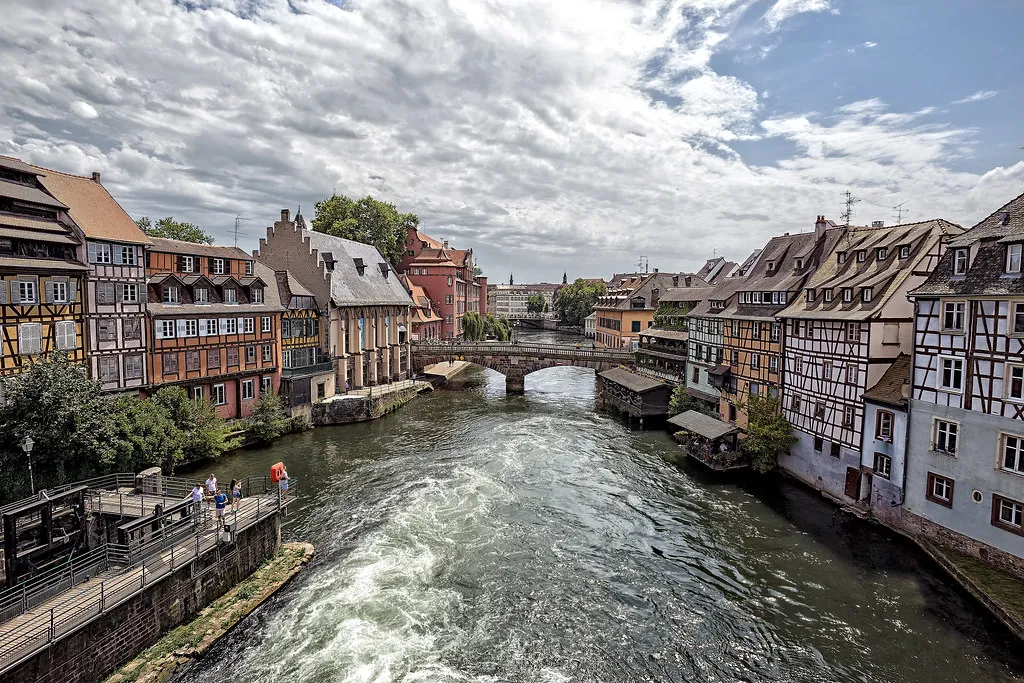
- Petite France — Fairytale setting with half-timbered houses and canals. Best for moody atmosphere and quiet wandering. Vibe: Whimsical, romantic. Crowds: Lighter than central squares. Hours: Stalls 11 AM–8 PM. Cost: Free exploration, 3–8 euros for treats.
- Marché OFF at Place Grimmeissen — Eco-friendly, upcycled, social-impact goods. Best for ethical shoppers and those seeking alternatives to mass-produced décor. Vibe: Modern, socially conscious. Crowds: Light. Hours: 11 AM–8 PM. Cost: Free entry, 8–25 euros for upcycled items.
The Quiet Hour Itinerary: How Locals Experience the Market
If you want to experience Strasbourg like a local rather than a tourist, wake early and follow this rhythm. Most visitors arrive between 2 PM and 6 PM, which means 7 AM to noon is your window for authentic exploration without queues.
Start at Place Broglie at 7:30 AM when vendors are still arranging stalls and local shoppers browse undisturbed. The air is crisp, the Christkindelsmärik arch is beautifully lit, and you can have an unhurried conversation with artisans about their hand-painted ornaments. Spend 90 minutes here sampling fresh pain d'épices and vin chaud with minimal lines.
By 9 AM, head to Place de la Cathédrale. The cathedral's gothic spire casts long shadows across the wooden chalets, creating superior photography light (no harsh midday glare). This square reaches saturation by noon, so capture your photos by 10 AM and move on.
Between 10 AM and noon, explore Petite France's quieter stalls and wander the half-timbered streets before tour groups arrive. The neighborhood's charm is best experienced in relative silence—you'll hear river lapping against the bridges and church bells rather than crowds.
By 1 PM, take a break at a café in the old town to warm up, then consider the smaller markets (Marché OFF, Market at Temple-Neuf) where afternoon crowds remain manageable. Save the evening spectacle at Place Kléber (4–9 PM light show) for after 8 PM when you've rested.
Pro tip: Return to the market for dusk photography around 4:30 PM–5:30 PM (golden hour). The twinkling lights activate before full darkness, and the crowd is transitioning from afternoon to evening (brief lull of 30–45 minutes). This is when photos rival Instagram perfection without the 2,000-person selfie crowds.
Photography Tips: Capturing the Magic
Strasbourg is notoriously photogenic, but timing and technique separate social media gold from blurry crowd shots. These are the same strategies successful travel photographers use.
Golden hour (4:30 PM–5:45 PM) is non-negotiable. At this window, the lights sparkle like jewels while buildings retain texture and shadows. Avoid midday (11 AM–3 PM) when harsh sunlight flattens the atmosphere and washes out the magical glow.
Position your phone on a stable surface (market counter, wall, or small tripod) rather than holding it for handheld shots. Use your phone's exposure slider to dial down brightness by 20–30% before shooting. This prevents the bright market lights from bleeding out the image and losing detail in the darker buildings.
Night photography (8 PM onward): Turn off auto settings. Manually lock your focus on the building or stall you're shooting, then let the lights fall where they will. The musical light show at Place Kléber (8 PM–9 PM) is best filmed with exposure locked to the tree itself, not the surrounding darkness.
For daytime ambiance shots, include context—the half-timbered house behind the stall, the cathedral spire framed by garland, locals chatting over mulled wine. Close-ups of ornaments alone feel generic; wide shots with human presence feel authentic.
2026 Dates, Hours, and Getting Around
The Strasbourg Christmas Market opens Wednesday, November 25, 2026, and runs through Wednesday, December 23, 2026. Market hours are 11 AM–8 PM weekdays and 11 AM–9 PM Fridays-Sundays. On December 23 (final day), hours close at 6 PM to allow vendors time to pack.
Book trains and hotels by mid-October to secure reasonable prices. December weekends (especially December 19–20 and 26–27) sell out completely. If you must visit a weekend, target early December (November 28–29, December 5–6) when crowds are lighter and prices lower.
The city center becomes pedestrian-only during market hours. Park-and-ride lots on the city perimeter (Parkings Elsau, Cronenbourg) cost €10/day + €15 tram pass (covers all-day travel). The CTS tram system efficiently connects outer parking to the old town in 8–10 minutes.
Winter in Alsace is damp and windy (5–10°C / 41–50°F). Wear thermal layers, insulated waterproof boots, and hand warmers in coat pockets. A warm hat and scarf are essential—the narrow cobblestone streets funnel wind down from the cathedral.
Security checkpoints screen bags at the entrance to each major market square (required post-2016). Keep backpacks unzipped or carry a small crossbody bag to speed processing. No weapons or sharp objects are permitted.
Budget Breakdown: What Things Really Cost
Plan your spending realistically. A typical day at the Strasbourg market for one person runs €60–€120 depending on appetite and shopping intentions.
- Train from Paris (TGV): €40–€80 roundtrip (book 6+ weeks ahead for best rates; December prices spike to €120+)
- Vin chaud (mulled wine): €5–€6 per cup. Cup deposit is €1 (refundable if you return the cup; many keep them as souvenirs)
- Food stalls average: Flammekueche €6–€10, bratwurst €4–€6, pain d'épices €3–€5, Bredele (biscuits) €2–€4
- Ornaments & crafts: Hand-painted items €8–€25; mass-produced décor €2–€5
- Hotel (mid-range): €100–€150/night in October; €300–€450/night in December. Nearby Colmar offers €80–€120 rooms and is 30 min by train
- Tram pass (all-day): €5.80
- Public restroom: €0.50–€1 (coin-operated; bring euros)
Avoid impulse purchases. Many visitors spend €200+ on ornaments they later regret. Set a souvenir budget of €30–€50 per person and shop the final day (December 22–23) when vendors offer discounts.
Accessibility, Practical Tips, and Safety
Strasbourg's historic cobblestone streets are notoriously bumpy for strollers and wheelchairs. If mobility is a concern, focus visits on Place Kléber and the riverside areas (Palais Rohan, Marché OFF), which have smoother surfaces. Weekday mornings (7–10 AM) are significantly easier to navigate than afternoons because crowds thin movement.
Bring coins for public toilets (€0.50–€1; card payments not accepted). Most cafés require a purchase before letting you use facilities, so budget 1–2 café breaks per visit. Busy December weekends can mean 20-minute queues for the few public restrooms available.
Public WiFi is available at major hotels and cafés but unreliable at stalls. Offline maps (download in advance) are more reliable than data connections.
Cash is still king at smaller artisan stalls, though most vendors now accept contactless card payments. Withdraw euros at the train station ATM (better rates than airport exchanges). Small bills (€10–€20) are easier than large notes.
Petty theft is rare but pickpockets do work crowded weekend markets. Keep valuables in an inside jacket pocket or crossbody bag worn in front. Avoid carrying expensive cameras or phones visibly during peak hours.
The Christmas market atmosphere is family-friendly and safe. Strasbourg has heavy police presence during the season, especially after dark. That said, avoid exploring far from the old town late at night alone.
What to Eat at the Strasbourg Christmas Market
Sampling the local street food is a vital part of the Alsatian experience. You must try the Bredele, which are small traditional butter cookies made in various shapes. These treats are often flavored with anise, cinnamon, or orange zest for a seasonal kick.
Vin chaud, or mulled wine, is the most popular drink found at every corner. It is usually served in a reusable plastic cup that requires a small deposit. You can learn more about what to eat strasbourg christmas market to find the best savory options.
Flammekueche, or tarte flambée, is a thin-crust pizza topped with cream, onions, and bacon. It is often served in manageable slices that are easy to eat while standing. Expect to pay between 5 and 10 euros for a generous portion of this local specialty.
Warm baguettes filled with melted raclette cheese offer a hearty meal on a cold day. These stalls are easy to find by following the distinct and delicious scent of toasted cheese. Most food vendors accept both cash and contactless card payments for your convenience.
Gingerbread fans should look for the 'Pain d'Épices' stalls near the historic cathedral. These cakes are often beautifully decorated and make excellent gifts for friends back home. Always ask for a sample if you are unsure which spice blend you prefer.
Common Mistakes and Local Insights
Many tourists make the mistake of only visiting the largest and most famous squares. Some of the best artisan products are hidden in smaller, less crowded side streets. Take the time to wander away from the main crowds to find unique treasures.
Arriving on a Saturday afternoon can lead to overwhelming crowds and long queues for food. If you must visit on a weekend, try to browse the stalls early in the morning. Most vendors open by 11:00 AM before the tour buses arrive.
Remember that the reusable cups used for drinks can be returned for a one-euro refund. Many people keep them as souvenirs, but returning them helps reduce waste in the city. Look for the designated return bins or stalls to get your deposit back.
Public restrooms can be difficult to find when the city is packed with visitors. Most cafes require a purchase before you can use their facilities during the market season. Plan your breaks strategically to avoid long waits at the few public toilets available.
Do not forget to explore the local shops located inside the permanent buildings. Many boutiques offer special holiday displays and unique Alsatian goods that you won't find in the stalls. These indoor spaces also provide a much-needed break from the winter wind.
Planning a Day Trip from Paris
A strasbourg christmas market day trip from paris is very feasible thanks to high-speed trains. The TGV connects Paris Gare de l'Est to Strasbourg in approximately 1 hour and 45 minutes. This fast connection makes it possible to see the highlights in a single day.
Booking your train tickets several months in advance ensures the lowest possible fares. Prices tend to rise sharply as the holiday season approaches and seats sell out. Aim for an early morning departure to maximize your time in the Alsace capital.
The Strasbourg train station is located within easy walking distance of the historic center. You can reach the first set of market stalls in about 10 minutes on foot. Follow the signs for 'Centre Ville' to find your way to the festive action.
If you only have one day, follow the quiet hour itinerary: arrive by 7:30 AM to beat crowds at Place Broglie, spend two hours there, then transition to Place de la Cathédrale by 9 AM (golden photography window). Grab a quick lunch from a stall by 11 AM, then explore either Petite France or the smaller markets (Marché OFF, Temple-Neuf) between noon and 3 PM. This rhythm avoids peak afternoon crowds and allows time for the evening light show at Place Kléber (4:30–5:30 PM golden hour) before your return train.
The last trains back to Paris usually depart around 8:00 PM or 9:00 PM. Check SNCF's return schedule (bookable 6–8 weeks in advance) before finalizing your day plan. Seeing the city lights at dusk before you leave is a perfect way to end the day.
Alternatives if Strasbourg Feels Overwhelming
If you visit Strasbourg and find 2-million-visitor crowds unmanageable, the Alsace region offers quieter alternatives within 30–60 minutes by train. These markets have identical charm but 70% fewer tourists.
- Obernai (15 min by train) — Charming town square with 60+ stalls, local artisans, and half-timbered architecture. Crowds: 90% lighter than Strasbourg. Vibe: Cozy, authentic, old-world. Hours: Daily 10 AM–8 PM through December 23. Cost: Free entry. Drawback: Opens December 1, not November 25.
- Colmar (30 min by train) — Second-largest market in Alsace with themed squares (Place Unterlinden for crafts, Rue des Marchands for food). Crowds: 60% lighter; still festive without overwhelming rush. Vibe: Smaller-town magic, medieval streets. Hours: Daily 11 AM–9 PM. Cost: Free entry. Highly recommended if you have 2 days to split Strasbourg and Colmar.
- Metz (1 hr by train toward Lorraine) — Cathedral backdrop similar to Strasbourg but with far fewer international tour groups. Markets spread across four squares (less congestion). Vibe: Elegant, quieter, local focus. Crowds: Very light. Hours: Daily 10 AM–8 PM. Cost: Free entry. Best for a second Christmas market day without Strasbourg crowds.
- Kaysersberg (45 min by bus from Strasbourg) — Medieval wine village with intimate market runs on Advent weekends only (November 29–30, December 6–7, 13–14, 20–21 in 2026). Crowds: Extremely light (2,000–5,000 vs. 2 million). Vibe: Fairytale village, costumed vendors. Best for: Those who want quiet market magic and are flexible on dates. Drawback: Only weekend Advent dates, not daily market.
Recommendation: If you have flexibility, combine Strasbourg (weekday morning for quiet experience) with either Colmar or Obernai for a full 2–3-day Alsatian market experience. This approach gives you the full Strasbourg spectacle without the Saturday-afternoon crushing, plus the authentic local charm of smaller towns.
Frequently Asked Questions
When does the Strasbourg Christmas Market start in 2026?
The market typically begins in the final week of November and runs until late December. For specific opening hours and event schedules, check the strasbourg christmas market dates guide. Stalls usually open daily from 11:00 AM to 8:00 PM.
Is the Strasbourg Christmas Market free to enter?
Yes, there is no admission fee to enter the various market squares across the city. You can wander through the stalls and enjoy the decorations without spending any money. However, you will need cash or a card for food, drinks, and souvenirs.
Can I visit the market with a stroller or wheelchair?
The historic center features many cobblestone streets which can be bumpy for strollers and wheelchairs. Crowds during the weekends also make navigation quite challenging in the narrowest areas. Visiting during weekday mornings provides the smoothest experience for those with mobility needs.
The Strasbourg Christmas Market remains a bucket-list destination for anyone who loves the holiday season. From its 16th-century origins to its modern sustainable initiatives, the city offers a rich cultural experience. You will leave with wonderful memories and perhaps a few handmade ornaments for your tree.
Careful planning helps you navigate the crowds and find the best local flavors. Whether you visit for a day or a week, the magic of Alsace is sure to impress. Start booking your 2026 trip early to enjoy the best of the Capital of Christmas.
 15 Best Christmas Markets Europe: 2026 Travel GuideApril 21, 2026
 Rathausplatz Christmas Market Guide: Vienna’s BestApril 21, 2026
 Strasbourg Christmas Market Best Stalls: Top 2026 GuideApril 21, 2026