
Strasbourg Christmas Market Day Trip From Paris Guide
Discover how to take a Strasbourg Christmas Market day trip from Paris. Get train tips, food advice, and the best stall locations for 2026.
On this page
10 Essential Tips for a Strasbourg Christmas Market Day Trip From Paris
Taking a strasbourg christmas market day trip from paris is one of Europe's most rewarding winter day trips. High-speed TGV trains connect the two cities in under 2 hours, making it feasible to leave Paris in the morning and return the same evening. With proper planning and timing, you can experience the Christkindelsmärik, taste authentic Alsatian delicacies, wander Petit France's twinkling streets, and still catch the illuminated cathedral at night. This comprehensive guide covers everything you need for a seamless and unforgettable festive escape.
1. Logistics: Booking TGV Tickets and Gare de l'Est Navigation
The TGV (Train à Grande Vitesse) is your fastest route from Paris Gare de l'Est to Strasbourg, departing regularly from platforms 2-12 or 23-30. Journey time is typically 1 hour 45 minutes. Book your tickets through the official SNCF app or Omio at least 3 months before your trip to secure the best fares. December prices surge dramatically—booking now rather than in November can cut ticket costs by 50% to 70%. A round-trip ticket booked in early September may cost €30-40; the same ticket in November costs €80-120.
TGV booking window strategy: SNCF opens bookings exactly 90 days in advance. The lowest prices appear within 7 days of that opening window before rising as seats fill. Mid-week departures (Tuesday-Wednesday) are 20-30% cheaper than Friday-Sunday. If December 25 conflicts with your travel, December 15-20 and December 26-31 are sweet spots between the holiday rush and New Year's crowds.
Pro tip: Ouigo (budget TGV) offers lower prices (sometimes €15-25 each way) but has strict luggage limits (one carry-on, one small personal item). Standard TGV InOui provides 1-2 larger bags, seat selection, and WiFi. Arrive at Gare de l'Est at least 30 minutes before departure; gates close 5 minutes before the train leaves, and you forfeit your entire ticket if missed.
Return trains typically depart Strasbourg between 8:00 PM and 9:00 PM on weekdays, allowing you to see the cathedral illuminated before heading back. Direct trains are preferable to connections via Lyon or other hubs, which can add 2+ hours. Check noel.strasbourg.eu for the exact festival dates to align your booking with the full market season (late November through late December, typically closing December 24-25).
2. Arriving in Strasbourg: A Step-by-Step Strategy for Day Trippers
You arrive at Strasbourg Gare Centrale at roughly 11:00 AM (if on a typical 8:30 AM departure). The cathedral and main markets are just a 15-minute walk—but your first 30 minutes matter enormously for maximizing a day trip.
Your 30-minute arrival protocol: Walk directly from the platform toward Place de la Cathédrale (ask staff for directions—it's unmissable). Skip luggage storage; carry a small daypack instead. Bypass the Petit France neighborhood on arrival; you'll revisit it at sunset when the lights are best.
Immediately grab a map (free at the tourist office in the station or print one beforehand). Find a café or market stall and consume a quick coffee and pastry while reviewing your itinerary—this psychological reset prevents decision paralysis once amid 300 chalets. If restrooms are critical, locate one near Place Kléber now; midday lines at public facilities can stretch 10+ minutes.
Check the weather app for sunset time (early December = 4:30 PM; late December = 4:15 PM). Plan your Petit France visit for 3:00 PM to 4:45 PM to catch both daylight architecture and the moment lights ignite. This single structural decision eliminates the mid-afternoon "now what?" energy drain that kills many day trips.
3. The Best Christmas Markets: From Christkindelsmärik to the Cathedral
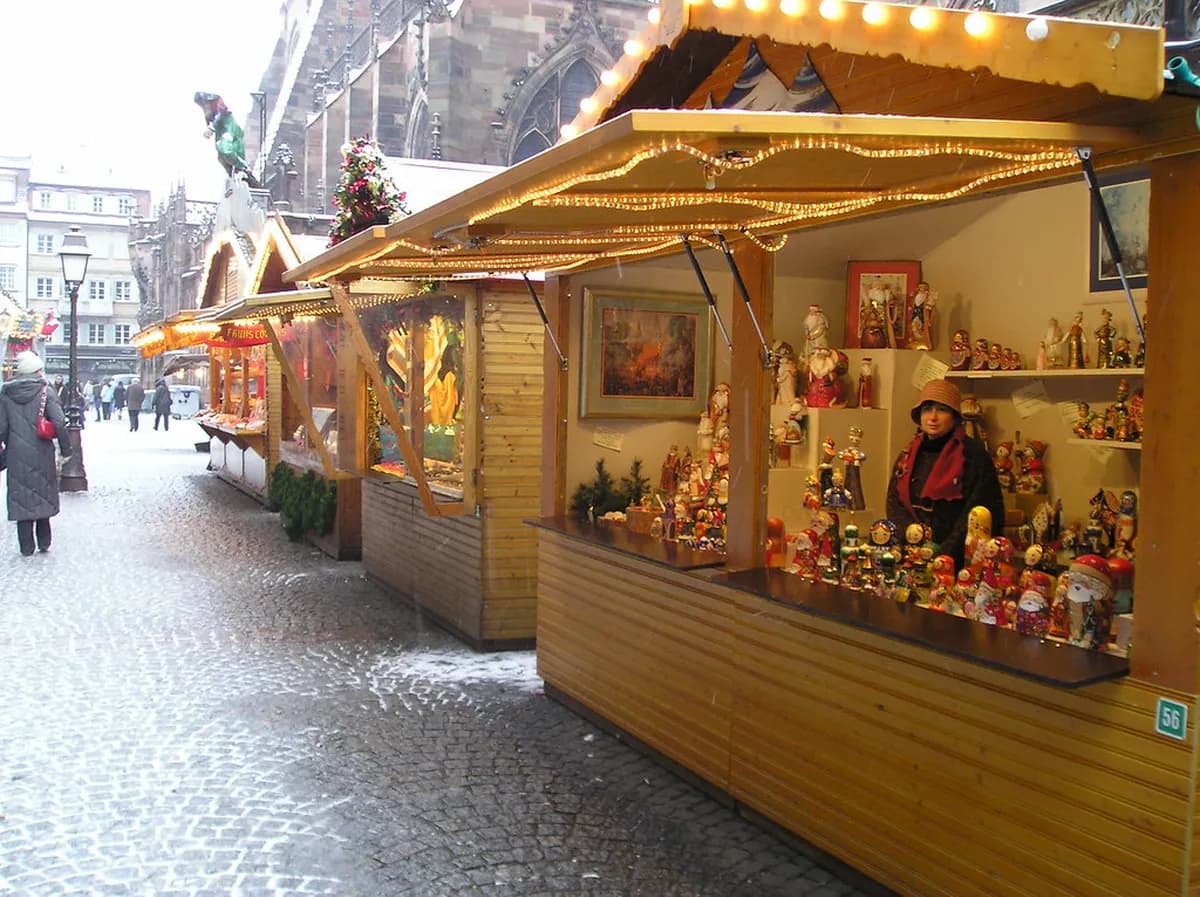
Strasbourg operates 8 major Christmas market zones (2026 locations subject to change, but historically consistent). The core triumvirate for a 5-6 hour day trip is Place de la Cathédrale, Place Kléber (Great Tree), and Place Broglie (Christkindelsmärik). Surrounding secondary markets include Petit France (Benjamin Zix/Saint-Thomas), Place Gutenberg, and Le Carré d'Or, each offering unique crafts and foods. The total market footprint spans roughly 300 wooden chalets across 1 square km of walkable medieval streets—easily navigable on foot in a single day if you're systematic.
Crowd heat map (4-hour windows, December peak season, weekdays vs. weekends): Place de la Cathédrale (historically the busiest market) peaks Friday-Sunday 12:00 PM-2:00 PM and 6:00 PM-8:00 PM, with 5,000-8,000 concurrent visitors. Weekday mornings (Tuesday-Thursday, 10:00 AM-12:00 PM) are 40% less crowded. Place Kléber (the Great Tree photo draw) surges 2:00 PM-4:00 PM daily as tour groups converge. Place Broglie (Christkindelsmärik, the historic 1570-founded market) and Petit France are least crowded 11:00 AM-12:00 PM and 4:30 PM onward, especially on weekdays. Pro strategy: arrive early, hit Petit France + Broglie first (when you're fresh), pivot to the Cathedral zone mid-afternoon as crowds thin, then finish with Place Kléber's evening lights (which peak aesthetically after 6:30 PM when the square's merchant lights ignite against the darkening sky). On weekends, arrive 15 minutes earlier at each stop; weekday visits gain 30+ minutes of breathing room per zone.
All markets accept the reusable plastic cup system (€1 deposit, refundable; no deposit if you keep the cup). Keep your receipt—stalls share a unified cup design so your cup works across all zones. The Christkindelsmärik (dating to 1570, meaning it's Europe's second-oldest continuously operating Christmas market after Dresden's) specializes in handmade ornaments, wooden toys, and authentic gingerbread baked on-site by Alsatian artisans. Place Kléber's 30-meter Great Tree hosts nightly synchronized light shows at 6:00 PM and 8:00 PM with accompanying Christmas carols—the timing is worth coordinating into your evening route. Don't miss the Cathedral's astronomical clock presentation (runs hourly at :00 sharp; the 12:00 PM and 4:00 PM shows are most crowded).
4. Beyond the Chalets: Must-See Strasbourg Attractions and Culture
The Cathedral of Strasbourg (Cathédrale Notre-Dame de Strasbourg) is impossible to miss—its 142-meter sandstone spire dominates the skyline and is visible from virtually every market square. Entry to the interior is free; the interior's 13th-16th century stained-glass windows are breathtaking, especially when afternoon light streams through. The 14th-century astronomical clock is the star attraction: a 4-meter-tall mechanical marvel that has tracked solar, lunar, and planetary movements for 650+ years. The clock's main show occurs hourly at :00 sharp—figures emerge, bells chime, and a crowing rooster crow—but the twice-daily full performance (12:30 PM and 10:00 PM) includes the Apostles' procession and takes 15 minutes. If time permits, climb the 332 steps to the bell tower's observation platform for panoramic 360-degree city views (€5, reduces to €3 with a Strasbourg City Card). The platform offers unobstructed cathedral views, the Vosges mountains to the east, and the entire market zone below—especially magical at dusk.
Petit France (literally "Little France," a historic fishermen's and tanners' district from the 16th century) features 16th-century half-timbered houses with steep roofs, dormer windows, and exposed wood beams—reflected perfectly in the Ill River canals below. The neighborhood's narrow cobblestone streets, arched stone bridges (including the famous Ponts Couverts/Covered Bridges), and merchant lights strung between buildings create what many call Europe's most photographed Christmas scene. Maison des Tanneurs (built 1572, still visible with its timber-frame gables intact) operates as a traditional Alsatian winstub (wine lounge), famous for choucroute garnie—a robust sauerkraut-and-five-meats dish that genuinely warms you for hours of market wandering. Reserve ahead in December or expect 30-minute waits. Walking the Ponts Couverts loop takes 20-30 minutes and passes through three historic towers (Towers of Fishmongers, Tanners, and Millers) that once guarded the district.
The Historical Museum of Strasbourg (Musée Historique, €5 entry, included in City Card) showcases the city's evolution from medieval Holy Roman Empire trade hub to modern French capital. Most day-trippers skip it for market time, but if weather turns poor or crowds overwhelm (which can happen 2:00 PM-4:00 PM on weekends), a 45-minute interior visit restores energy and teaches the regional context behind Alsatian culture, architecture, and food traditions. The museum's ground floor focuses on medieval manuscripts and Gutenberg's printing press (he invented modern book printing here in 1440); upper floors cover Alsatian textiles, pottery, and the region's unique position between French and German spheres. The Strasbourg City Card (€6, valid 7 days, available at the tourist office near Place de la Cathédrale or online) grants 50% discounts on all major attractions and is worth buying if you plan the museum, cathedral platform climb, and a boat tour of the canals (Batorama, €14 full price, €9 with card, runs hourly).
5. Alsatian Gastronomy: Gourmet Food Tours and Local Specialties
Alsatian Christmas cuisine revolves around mulled wine (vin chaud—spiced with cinnamon, cloves, star anise), gingerbread (pain d'épices), and savory pastries born from the region's position between French and German culinary traditions. Flammekueche (also spelled flammküche or tarte flambée) is a thin-crust pizza topped with crème fraîche, onions, and lardons (bacon strips)—a 2026 must-try that costs €6-8 at market stalls and is best eaten standing up while still hot. Spätzle, a German-Alsatian egg noodle with a chewy texture, pairs perfectly with choucroute garnie (sauerkraut with five types of sausage, boiled potatoes, and juniper spice)—a €15-18 restaurant entree but lighter sausage-only bowls (€8-10) exist at casual stalls. Kugelhopf is a brioche-style ring cake studded with almonds and raisins, sold by the slice (€3-5) at bakery stalls or whole (€15-25) for souvenir-taking.
Self-guided vs. private food tour trade-off—comprehensive analysis: Self-guided eating (market stalls + casual lunch stops) costs €25-40 for a full day, gives you total control over timing and portions, and eliminates tour schedule stress. You'll sample vin chaud (€3-5 per cup, reusable), flammekueche (€6-8), gingerbread (€2-4), bredele cookies (€3-5 per handful), and a full lunch (€15-20) or dinner reservation (€25-40). Structured private food tours (via GetYourGuide, typically €60-120 per person) last 2-3 hours, cover 8-12 tastings with a knowledgeable local guide who provides cultural/historical context, and move you through hand-picked artisan stalls. Tours are valuable if you're deeply food-focused or solo and want social interaction; risky on a tight day-trip schedule because they lock you to a fixed 2-3 hour window, eating up museum/Petit France time. For a single day from Paris, self-guided wins: browse stalls at your own pace, sample freely, skip things you dislike, and spend savings on a formal dinner reservation at Chez Yvonne (traditional winstub operating since 1873, €30-40, requires advance booking) or Le Gurtlerhoft (14th-century caveau/wine cellar carved into stone, €25-35, accepts walk-ins but crowded December 6-23).
Bredele (traditional butter cookies shaped like stars, hearts, pretzels, and bells) are ubiquitous—sold in paper cones at almost every market stall. Candied nuts, roasted chestnuts, and kougelhopf (ring-shaped cake with almonds and raisins) are also seasonal staples. Most individual food items cost €2-8 per portion; a grazing strategy (one item per market zone) totals €20-30 before a sit-down meal. Restaurants near the cathedral require December reservations booked 2-3 weeks ahead; walk-in seating at casual spots like Café des Épices (on Place de la Cathédrale, €18-25 for a full lunch) is usually available at 12:00 PM-1:00 PM or 3:00 PM-4:00 PM. Always carry the €1-2 small bills required for market stall purchases—many don't take cards or require €5+ minimums.
6. Exploring Petit France: Timing and Photography
Petit France is the heart of Strasbourg's Christmas charm—half-timbered houses from the 16th century line canals under strings of white lights. This district is best visited between 3:00 PM and 5:00 PM when daylight fades and the merchant lights illuminate, and worst visited during midday when crowds peak and the lighting is flat.
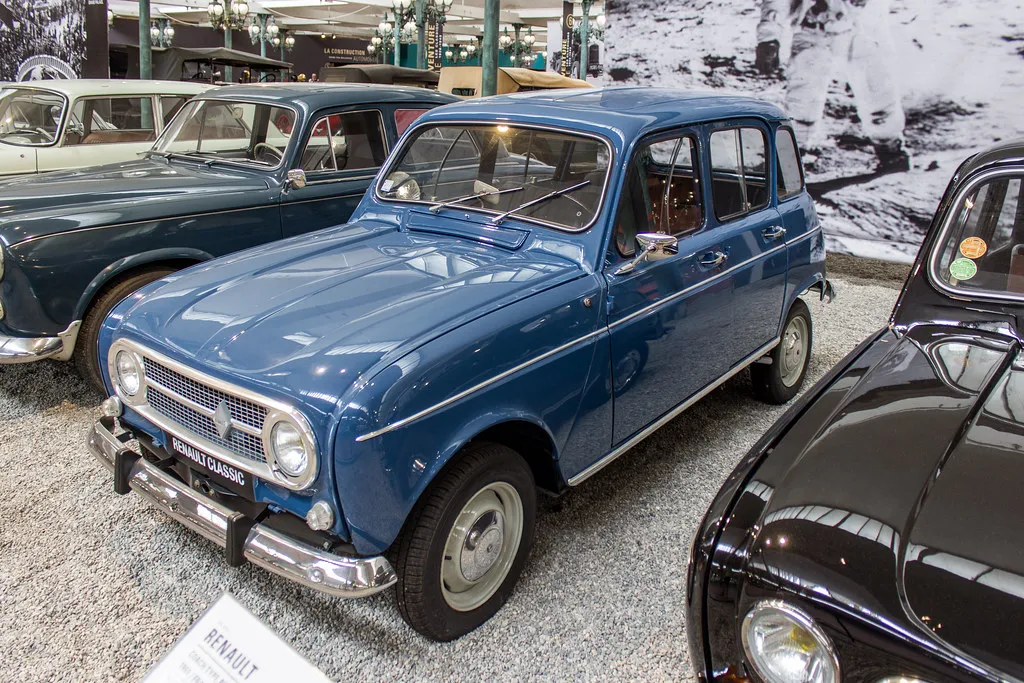
The primary market in Petit France is at Places Benjamin Zix and Saint-Thomas, featuring local artisans and the Maison des Tanneurs restaurant. Walk across the Ponts Couverts (Covered Bridges), part of the 17th-century Vauban fortifications—a 10-minute loop that showcases the canal-side architecture at its finest. Sunset (around 4:30-4:45 PM in December) transforms the reflections on water into a photographer's dream; plan to be at a bridge during this window.
Narrower side alleys (Ruelle des Charpentiers, Rue des Moulins) are traffic-free and intimate—ideal for solo travelers or couples seeking quieter moments. Local gift shops here sell unique Alsatian crafts (ceramics, wooden ornaments, linens) that tourist-dense main squares don't stock. Budget 60-90 minutes for a relaxed Petit France loop; rushing through wastes the neighborhood's entire charm.
7. Is It Worth It? A Honest Review of Pros, Cons, and Costs
A Strasbourg Christmas market day trip from Paris is worth it for most travelers, but expectations matter. You're committing 12 hours door-to-door (2 hours train each way, 8 hours in city) for a festive sprint, not a leisurely exploration.
Pros: Authentic European Christmas market atmosphere (genuinely historic, not touristy); TGV speed eliminates road fatigue; Alsatian architecture and food are regionally unique; evening lights create unforgettable photos; the Christkindelsmärik (founded 1570) carries more gravitas than Paris markets.
Cons: December crowds can exceed 50,000 daily visitors (late November and early December are less crowded). TGV costs €30-100 round trip depending on booking timing. Tight schedule means you'll miss museums, day trips to Colmar, and unhurried meandering. Weekday visits are significantly less hectic than weekends. December weather is cold (avg. 2-5°C / 36-41°F) with frequent rain or snow.
Budget breakdown (per person): TGV tickets €50-80 / Food €25-40 / Attractions (cathedral, City Card, boat tour) €10-25 / Dinner €25-40. Total: €110-185 per person. Couples or groups of 3+ see economies of scale.
Day-trip verdict: Best for Paris-based travelers wanting a festive evening escape; worst for those seeking Alsatian cultural immersion (a 2-3 day stay is ideal). If you have only one December day in France, Strasbourg wins over Paris markets.
8. The Colmar Extension: Can You Fit Both Markets in One Day?
Colmar, a quaint medieval town 30 km south, has equally famous Christmas markets centered on "La Petite Venise" (Little Venice), a canal district more intimate than Strasbourg's Petit France. A direct regional train connects Strasbourg to Colmar in 30 minutes (€22 round trip, hourly departures). Can you do both in one day from Paris? Technically yes, but it's exhausting.
Colmar two-market combo itinerary: Depart Paris 8:00 AM → Arrive Strasbourg 10:00 AM → Hit Strasbourg markets 10:30 AM-1:00 PM (core only: Cathedral + Place Kléber) → Catch 1:30 PM train to Colmar → Colmar markets 2:15 PM-5:30 PM → 6:15 PM train back to Strasbourg → Evening stroll + dinner 7:00 PM-9:00 PM → Depart Strasbourg 9:00 PM. This sequence requires pre-booked train tickets and zero buffer for crowds, restrooms, or lingering.
Better approach: Strasbourg priority. The Christkindelsmärik and Petit France are more iconic than Colmar; the time spent traveling erodes the visit quality. If the Colmar markets are a must, book an overnight stay in Strasbourg and dedicate a morning to Colmar. A Strasbourg day trip from Paris + separate Colmar extension (2 nights) yields superior experiences.
9. Solo Travel Safety: Practical Advice for Independent Explorers
Strasbourg is very safe for solo travelers—safer, arguably, than Paris, with visible police presence and car-free market zones (reducing vehicular risk). The 2018 Christmas market attack was a tragedy, but heightened security (bag checks, police visibility, restricted vehicle access) now makes the markets demonstrably secure.
Solo traveler decision matrix: Strasbourg vs. Paris (safety, social ease, cost):
- Safety: Strasbourg = Excellent (car-free, policed); Paris = Excellent (same)—tie.
- Social ease for solo visitors: Strasbourg = High (markets encourage mingling, shared mulled wine culture, intimate cafés); Paris = Medium (markets exist but smaller, fewer spontaneous interactions)—Strasbourg wins.
- Cost: Strasbourg day trip = €110-185 (includes TGV); Paris day at home = €30-50 (local markets)—Paris wins for budget.
- Authenticity: Strasbourg = Highest (regional Alsatian culture distinct from Paris); Paris = High (French capital, but fewer regional differences)—Strasbourg wins.
Solo recommendation: Strasbourg edges Paris for a December day trip if you have the budget and seek cultural difference. The markets' intimate stall-to-stall interaction and absence of Paris's "tourist treadmill" vibe make solo exploration feel natural, not isolating. Stay in a hostel or budget hotel to maximize sociability (Citadines Kléber is a reliable mid-range option near the markets).
10. Winter Health: Navigating Urgent Care and Cold Weather Prep
December in Strasbourg averages 2-5°C (36-41°F) with frequent rain and occasional snow. Waterproof boots, thermal layers, and a windproof coat are non-negotiable. Carry hand warmers (reusable chemical packs, €2-5, available at pharmacies)—they restore dexterity if photography or sightseeing causes numbing.
Winter illness happens. Bring a small medical kit: blister pads (cobblestones + walking), ibuprofen (headaches from cold + crowds), and throat lozenges (cold air irritates). If you develop flu-like symptoms or injuries mid-trip, Strasbourg pharmacies (Pharmacie de Nuit on Rue de la 1ère Armée, open 24/7) dispense over-the-counter remedies without a doctor's appointment.
For emergencies, SOS Médecins Alsace (phone 15 or +33 3 88 35 22 55) dispatches doctors to your hotel for urgent care within 30-60 minutes (avg. €80-120 cost). Travel insurance covering medical expenses (typical plans: €15-30 for a 1-week trip) is strongly recommended—a sprained ankle mid-day-trip can ruin everything. Your home country's embassy or hotel concierge can also direct you to English-speaking doctors if needed.
Hydration is critical; mulled wine and hot chocolate feel warming but promote dehydration in cold air. Alternate alcoholic drinks with water. Eat substantial carbs (bredele, flammekueche) to maintain energy—running on sugar alone causes crashes by late afternoon. Most tourists miss this; you won't.
Frequently Asked Questions
Is a day trip to Strasbourg from Paris worth it?
A day trip is very worth it because high-speed trains connect the cities in under two hours. You will have about eight to ten hours to explore the main markets and the historic city center. It is one of the most popular Christmas markets in France for international visitors.
How much does the train from Paris to Strasbourg cost?
Train prices vary greatly depending on how early you book your tickets. High-speed TGV tickets typically range from 30 to 100 euros for a round trip. Booking two to three months in advance usually secures the lowest possible prices for travelers.
Can I see all the Strasbourg Christmas markets in one day?
Yes, you can see the main markets in one day because they are located close together. The historic city center is compact and very easy to navigate on foot. Focus on the squares near the cathedral and Place Kléber to see the most iconic highlights.
A Strasbourg Christmas market day trip from Paris is a singular winter experience—10 hours of travel yields an entire universe of European charm compressed into one festive sprint. The combination of TGV efficiency, authentic Alsatian culture, and 1570-era market tradition creates memories that linger long after the holidays end.
Book your 2026 visit early (3 months out) to secure the best TGV fares and restaurant reservations. Plan your arrival strategy, respect the crowd heat maps, prioritize Petit France's sunset window, and don't neglect winter health prep. With these 10 essential tips, you'll experience Strasbourg's Christmas magic like a seasoned traveler—not a rushed tourist.
The Christkindelsmärik has welcomed 450+ years of visitors. This December, you'll be next.
 Edinburgh Hogmanay vs Christmas Market: Winter GuideApril 21, 2026
 Strasbourg Christmas Market Best Stalls: Top 2026 GuideApril 21, 2026
 Strasbourg Christmas Market Dates: 2026 Travel GuideApril 21, 2026