
Nuremberg Christmas Market Dates 2026: Plan Your Visit
Check the Nuremberg Christmas Market dates for 2026. Plan your trip with tips on opening hours, locations, and the best local gingerbread treats.
On this page
Nuremberg Christmas Market Dates and Essential Visiting Guide
Planning a trip to Bavaria requires knowing the exact nuremberg christmas market dates to catch the iconic opening ceremony.
The Christkindlesmarkt typically begins on the Friday before the first Sunday of Advent in the historic Main Market Square.
Visitors gather under the Frauenkirche to hear the famous prologue delivered by the golden-winged Christkind, a young woman elected every two years to represent the Christ Child tradition.
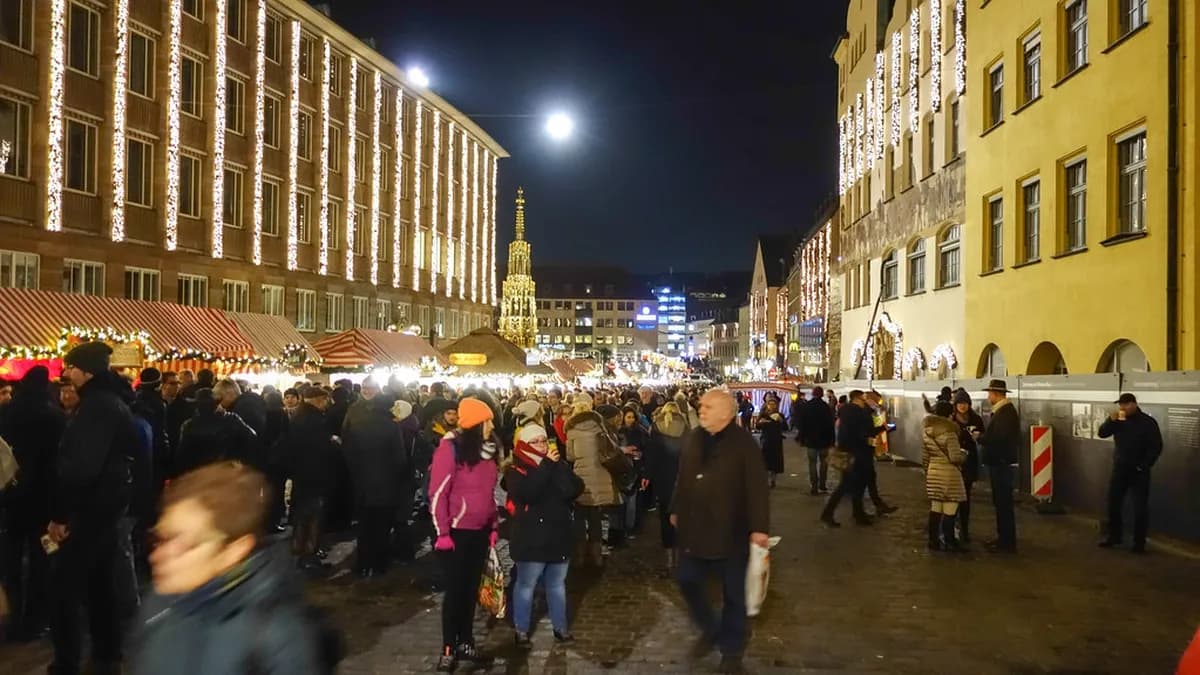
This medieval setting transforms into a winter wonderland filled with festive lights and nearly 200 traditional wooden stalls selling authentic Bavarian handicrafts and seasonal delicacies.
Official Nuremberg Christmas Market Dates 2024–2026
For the 2026 season, the market is expected to open its gates on Friday, November 27th with the solemn opening ceremony at 5:30 PM, drawing large crowds to the city center.
The market then operates daily from 10:00 AM until 9:00 PM through December 23rd, closing early on Christmas Eve at 2:00 PM.
Reviewing the Christkindlesmarkt Nuremberg guide helps you track any specific changes to the seasonal schedule.
- Daily Operating Hours
- Monday-Sunday: 10:00 AM - 9:00 PM
- Opening Friday (Nov 27): Opening ceremony 5:30 PM; market 10:00 AM - 9:00 PM
- Christmas Eve (Dec 24): 10:00 AM - 2:00 PM
- Seasonal Overview
- Start Date: November 27, 2026 (Friday)
- End Date: December 24, 2026 (Christmas Eve)
- Duration: 4 weeks
- Location: Hauptmarkt Square, Nürnberg 90403
The Christkind Tradition and Opening Ceremony
The Christkind (Christ Child) is the symbol and heart of the Nuremberg Christmas Market, with roots tracing back to the Protestant Reformation.
Every two years, the role is elected among local young women (ages 16–19) from Nuremberg, making it one of the most coveted honors in the city.
On opening day at 5:30 PM, the elected Christkind—dressed in a white and gold costume with golden wings—appears on the balcony of the Frauenkirche church to recite the traditional prologue, blessing the market and inviting all to celebrate.
This ceremony draws thousands and fills Hauptmarkt with a sense of civic pride and festive tradition. Arrive early if you wish to witness this moment from a good vantage point, as the square becomes densely packed as 5:30 PM approaches.
Major Market Locations: From Hauptmarkt to Sister Cities
Nuremberg features three distinct Christmas markets within a short walk of each other, each offering a different vibe and merchandise focus.
Christkindlesmarkt (Main Market) on Hauptmarkt is the flagship—180+ wooden stalls with red and white striped roofs selling handcrafted ornaments, wooden toys, gingerbread, mulled wine, and local specialties. The Frauenkirche church provides a stunning backdrop and houses an observation terrace (limited hours, small fee) offering panoramic views of the entire market, especially magical at sunset around 4:30 PM.
Sister Cities Market (Markt der Partnerstädte) on Rathausplatz features goods from Nuremberg's international partner cities—Shenzhen (China), Atlanta (USA), Glasgow (Scotland), Limoges (France), Antalya (Turkey), and others. Here you'll find Lavender honey from Provence, Scottish whisky cake, Italian cheese, Nicaraguan coffee, and unique crafts unavailable at the main market, making it ideal for sourcing distinctive souvenirs.
Nuremberg Winter Village (Kinderweihnacht) on Hans-Sachs-Platz caters to families with rides including a large carousel, Ferris wheel (WinterWheel Nuremberg), and miniature steam railway. It offers a quieter, family-friendly atmosphere away from the main square's crowds while still maintaining festive market stalls and food vendors.
Best Times to Visit for Avoiding Crowds and Experiencing Magic
The Nuremberg Christmas Market is one of Europe's most visited, attracting around 2 million visitors annually, so timing your visit strategically will enhance your experience.
Morning visits (9:00–11:00 AM) are remarkably tranquil—stalls are just opening, queues for food are minimal, and you can actually see the market's architecture and decorations clearly. Photography is exceptional in daylight, and you'll recognize locals shopping for their dinners alongside tourists.
Weekday afternoons (Tuesday–Thursday, 2:00–4:00 PM) offer a sweet spot between morning calm and evening buzz. The market has warmed up, vendors are fully engaged, but shoulder-to-shoulder crowds haven't yet formed.
Saturday and Sunday evenings are the busiest times. While the twinkling lights and holiday energy are undeniably magical, the market can feel like a mosh pit, especially in rainy or cold weather when visitors huddle under umbrellas. If you do visit evenings, expect slow movement through aisles and long waits for food.
Photography tip: Sunset (around 4:30 PM in late November) bathes the market in golden light and is ideal for photos before crowds swell. The Frauenkirche observation deck, if open, offers bird's-eye shots of the entire square illuminated against the darkening sky.
Many travelers choose a Nuremberg Christmas market day trip from Munich to experience the market during these quieter hours, then explore the city's historical sites during off-peak times.
Traditional Food and Drink to Experience
The Nuremberg Christmas Market is renowned for its authentic Bavarian culinary offerings, many of which are protected regional specialties.
Nuremberg Bratwurst (Nürnberger Rostbratwürste) comes in two iconic forms: large grilled sausages or, more traditionally, "Drei im Weckla" (three in a bun)—three small grilled sausages served in a crusty roll with mustard. These tiny sausages are a protected regional specialty; only bratwurst produced within Nuremberg's city limits may legally carry the name. They follow a 15th-century recipe using pork loin seasoned with marjoram.
Nuremberg Gingerbread (Lebkuchen) comes in many forms, but the premium variety is Elisenlebkuchen—a round, moist cookie with minimal flour, loaded with nuts, honey, and spices, often topped with chocolate or a sugar coating. Look for the "Original Nürnberger Lebkuchen" seal to ensure authenticity. These keep well, making them perfect souvenirs for the best bakeries for authentic gingerbread.
Glühwein (Mulled Wine) is ubiquitous at the market. A standard mug costs around 4–5 EUR plus a small refundable deposit (Pfand) for the ceramic mug itself—typically 1–2 EUR, returned when you bring the mug back to the vendor booth. Nuremberg's glühwein is frequently rated among Europe's best, and many visitors collect the festive seasonal mugs as souvenirs. If you don't want to return the mug, simply keep it; the Pfand is yours to forfeit. Heidelbeere Glühwein (blueberry mulled wine) is a local specialty worth seeking out, infused with nutmeg, cinnamon, and orange peel.
Feuerzangenbowle is a German specialty—a fiery, theatrical mulled wine where a sugar cube soaked in rum is lit on fire and allowed to melt into the wine below, caramelizing as it drips. The largest Feuerzangenbowle vat in the world (2.5 meters wide, 3.4 meters high, holding 9,000 liters) is at Fleischbrücke nearby.
Other Must-Tries: Roasted almonds (Mandeln), fried potato pancakes (Reiberdatschi), fresh pretzels (Bretzel), and the whimsical "Prune Men" (Zwetschgenmännle)—decorative figures made from dried prunes, nuts, and raisins representing different professions.
- Must-Try Local Flavors
- Bratwurst: Drei im Weckla (3 in a bun)
- Gingerbread: Elisen variety with nuts and chocolate
- Glühwein: Blueberry (Heidelbeere) or traditional spiced wine
- Feuerzangenbowle: Flaming mulled wine spectacle
- Prune Men: Decorative Zwetschgenmännle figures
Travel Logistics: Getting to Nuremberg by Air and Rail
By Air: Nuremberg Airport (NUE) is the closest and most convenient gateway, just 5 kilometers from the city center. The U-Bahn (subway) line U2 connects the airport directly to Nuremberg Hauptbahnhof (central train station) in approximately 12–15 minutes for around 2–3 EUR—the quickest and most cost-effective option.
From Munich Airport (MUC), approximately 160 kilometers southeast, high-speed ICE trains reach Nuremberg Hauptbahnhof in 1 to 1.25 hours with frequent connections. Frankfurt Airport (FRA), 220 kilometers northwest, takes roughly 2 to 2.5 hours via ICE train.
By Train: Nuremberg Hauptbahnhof is a major railway hub. Travel times from key cities: Munich (1–1.5 hours), Frankfurt (2–2.5 hours), Berlin (3+ hours). Book tickets in advance, especially during Christmas market season, though note that German trains can experience delays during winter months due to strikes or weather. Always have a backup plan if disruptions occur.
City-to-Market Transport: The Hauptmarkt is a 15-minute walk from Nuremberg Central Station via Königstraße, during which you'll pass smaller festive markets and holiday decorations. Walking is the best way to explore the Old Town, though public transport is excellent if you tire.
Where to Stay: Hotels and Neighborhoods near the Markets
The Old Town is the ideal base for experiencing the Christmas markets, as all three are within walking distance and it houses most of Nuremberg's historical attractions.
Best Locations: Book accommodation as early as possible—the market attracts around 2 million annual visitors, and good hotels near Hauptmarkt fill weeks in advance.
For Market-Facing Views: Sorat Hotel Saxx sits directly on Hauptmarkt. Rooms on higher floors offer stunning views of the lit stalls and evening festivities, though note that the market closes at 9:00 PM, so noise is limited to evening hours.
Central and Quiet: Karl August—A Neighborhood Hotel offers an unbeatable location one block from Christkindlesmarkt, within walking distance of the Imperial Castle (Kaiserburg), train station, and restaurants, while maintaining a quieter residential feel. Hotel FIVE is equally close to the market and well-reviewed. Centrum Apartments and Lorenz Apartments provide full kitchen access, ideal for longer stays or families wanting flexibility with dining.
Value Option: Hotel Agneshof offers spacious family rooms and wellness facilities in a quiet, central location just a short walk from the market.
For those with more flexibility, staying in towns like Bamberg (35–45 minutes by train) or Rothenburg ob der Tauber (1 hour 15 minutes by train) allows day trips to Nuremberg while enjoying quaintly less crowded alternatives with their own Christmas markets.
Unique Souvenirs and Handicrafts to Treasure
The market offers far more than gingerbread. The stalls showcase authentic Bavarian handicrafts that make memorable keepsakes.
Rauschgoldengel (Gold Foil Angels) are delicate, iconic figures made from thin brass foil, representing Nuremberg's artistic heritage. They're displayed on Christmas trees and in windows worldwide, instantly evoking the Nuremberg tradition.
Glühwein Mugs are seasonal collectibles. Each year features unique designs and often the year printed on the base. Serious collectors seek out mugs from different vendors and years, making them prized souvenirs from visits.
Wooden Toys and Nutcrackers are handcrafted at traditional stalls—intricately carved smokers (figures that burn incense as smoke flows from their mouths), wooden pyramids that spin via candle heat, and classic nutcrackers in traditional German garb.
Handmade Christmas Ornaments range from glass baubles to straw stars and wooden carvings, each made by local artisans.
Sister Cities Market Finds: For non-traditional gifts, the Sister Cities Market offers Scottish shortbread, Italian artisan chocolates, Shenzhen lanterns, and other international crafts unavailable elsewhere.
Frequently Asked Questions About Visiting
What is the Christkind, and why is it central to the market? The Christkind (Christ Child) replaced Saint Nicholas in Protestant Reformation theology and is elected every two years from Nuremberg's young women (16–19 years old). The elected Christkind opens the market by reciting the prologue from the Frauenkirche balcony at 5:30 PM on opening day—a centuries-old tradition imbuing the market with civic identity and festive meaning.
Is the Nuremberg Christmas Market open on Christmas Day? No, the market closes on December 24th at 2:00 PM. Most vendors close completely to celebrate with families, so plan to finish shopping and sightseeing well before the early afternoon closure on Christmas Eve.
How much does entry cost? Entry is free. You pay only for food, drinks, and crafts purchased from vendors. Budget approximately 10–20 EUR for a meal (bratwurst + drink) and another 5–15 EUR per souvenir.
What about the Glühwein mug deposit (Pfand)? Each mulled wine mug costs 4–5 EUR, with an additional 1–2 EUR deposit. Return the mug to any vendor booth to reclaim the deposit, or keep the mug as a souvenir by forfeiting the deposit. Many visitors intentionally collect mugs from different years and markets.
Frequently Asked Questions
What are the specific nuremberg christmas market dates for 2026?
The 2026 market is scheduled to run from November 27th through December 24th. Stalls open daily at 10:00 AM, with the grand opening ceremony taking place on November 27th at 5:30 PM. You can find more details about festive events across Germany to plan a longer holiday.
Is the Nuremberg Christmas market open on Christmas Day?
No, the market officially closes on December 24th at 2:00 PM. Most vendors pack up their stalls by late afternoon on Christmas Eve to celebrate with their families. Plan to finish your shopping and sightseeing before the early afternoon closure on the final day.
How much does it cost to enter the Nuremberg Christmas Market?
Entry to the Nuremberg Christkindlesmarkt is free for all visitors. You only pay for the food, drinks, and handcrafted gifts you choose to purchase from the vendors. Budget approximately 10 to 15 Euros for a basic meal and a festive drink during your visit.
Knowing the nuremberg christmas market dates and planning ahead ensures you experience one of the world's most famous holiday traditions in comfort rather than chaos.
From morning calm to sunset's golden light on the wooden stalls, from the Christkind's opening prologue to the aroma of gingerbread and mulled wine, Nuremberg offers an unforgettable Bavarian winter experience.
Book your hotel early, arrive midweek for fewer crowds, and leave space in your luggage for a collectible Glühwein mug and handcrafted Angel figure—tangible memories of Bavaria's most iconic holiday celebration.
 Best Christmas Markets Germany 2026: Festive GuideApril 21, 2026
 Marienplatz Christmas Market: Munich Guide 2026April 21, 2026
 Guide to the Medieval Christmas Market MunichApril 21, 2026