Prague Christmas Market Guide: 2026 Festive Tips
Discover the magic of a Prague Christmas Market. Get dates, food tips, and local secrets for your 2026 festive holiday in the Czech Republic.
On this page
Your Ultimate Prague Christmas Market Guide for 2026
Prague transforms into a glowing winter wonderland when the festive stalls open their doors. The scent of cinnamon and roasted nuts fills the chilly air near the historic center. Visitors from around the world gather to experience this legendary European holiday tradition. Planning your visit requires knowing the best spots and local customs for a smooth trip.
The city offers several distinct locations where you can enjoy the holiday spirit. Each market provides a unique blend of traditional crafts and seasonal treats for everyone. You will find bright lights reflecting off the Vltava River throughout the dark winter evenings. Navigating these busy squares becomes much easier with a clear and detailed plan.
This guide covers everything from the best snacks to the most authentic shopping stalls. Expect to see handcrafted ornaments and hear carols echoing through the narrow cobblestone streets. Early preparation ensures you catch the most popular events without feeling overwhelmed by crowds. Let us explore how to make the most of your festive journey in the Czech Republic.
Key Takeaways
- Visit Old Town Square early in the day to avoid the largest crowds.
- Try the traditional Svařák mulled wine for an authentic local taste.
- Look for 'Czech Made' labels on wooden puppets and glass ornaments to avoid mass-produced goods.
- Stay in a hotel within walking distance of Old Town or use the excellent tram system to reach neighborhood markets.
Essential Prague Christmas Market Dates and Hours
Knowing the prague christmas market dates is vital for booking your flights and hotels. Most major markets typically open during the last weekend of November each year. The festivities usually continue daily through the first week of January for late travelers. For 2026, the main markets are expected to run from late November until early January. Confirming these dates early helps you avoid missing the peak holiday season magic.
Food stalls usually open around 10:00 AM and close near midnight for late snacks. Craft stalls often close slightly earlier around 10:00 PM on most weekdays and weekends. Public holidays in the Czech Republic may affect the specific operating hours of some vendors. Smaller neighborhood markets might have shorter durations than the main tourist hubs downtown. Always check the official schedule for any special lighting ceremonies or musical performances.
Visiting during the weekdays often provides a much more relaxed shopping experience for guests. Weekends bring in many local families and regional tourists from neighboring European countries. The period between Christmas and New Year remains the busiest time for the city center. Plan your itinerary to include at least one weekday morning for stress-free browsing. The festive spirit peaks during the Advent Sundays leading up to the main holiday. Early December offers a great balance of full stalls and slightly thinner crowds compared to late December.
Magic at the Old Town Square Market
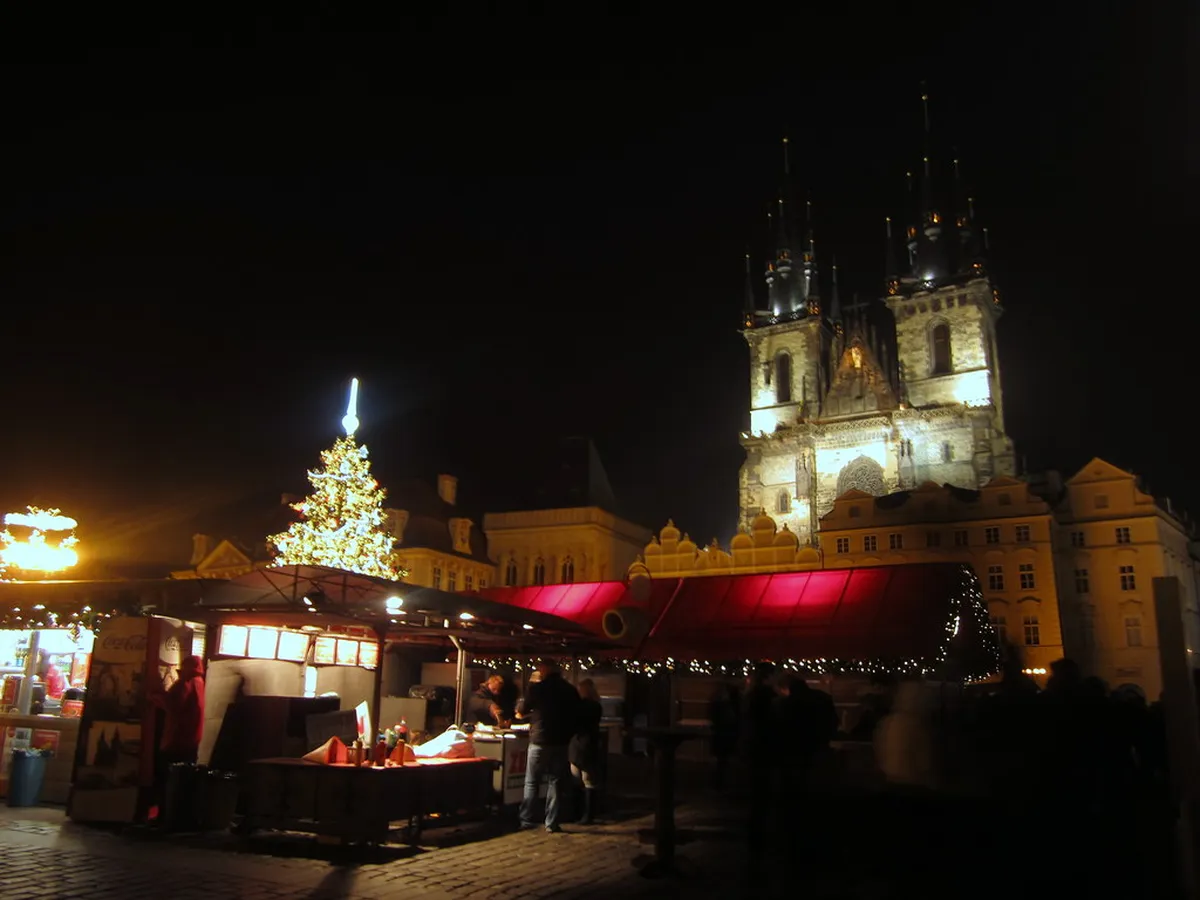
The old town square christmas market prague serves as the heart of the city's celebrations. A massive Christmas tree dominates the center of the square every single year. Thousands of lights twinkle against the backdrop of the iconic Týn Church towers. Most visitors start their festive journey here to soak in the classic medieval atmosphere.
Stalls in this area focus heavily on traditional handicrafts and high-quality holiday decorations. You can watch blacksmiths work on iron pieces right in front of the crowds. Local choirs often perform on the central stage during the late afternoon hours. The viewing bridge offers a perfect elevated spot for taking photos of the entire market. Crowds tend to peak in the evening when the tree lighting ceremony begins. Arriving before dusk allows you to browse the stalls with much more personal space. Keep an eye on your belongings as this popular spot attracts many tourists daily. The square stays open until late at night for those who enjoy the dark.
Small wooden huts line the square offering everything from lace to scented candles. Vendors usually accept both cash and cards, though small change remains very helpful. The surrounding restaurants provide a warm escape if the winter wind becomes too biting. Spending a few hours here is essential for any true holiday enthusiast visiting Prague.
Exploring Wenceslas Square Festivities
The wenceslas square christmas market prague offers a different vibe than the Old Town. This area is located just a short walk away from the main railway station. It features a more modern festive layout with wider paths for walking. Many locals prefer this spot for a quick drink after finishing their workday.
The stalls here often feature a mix of traditional goods and modern gift ideas. You can find plenty of warm clothing like wool hats and handmade scarves. The food selection is equally impressive, with several large grills serving fresh meat. It is a great place to find practical winter items for your trip. Wenceslas Square is surrounded by major department stores and international shopping brands. This makes it easy to combine traditional market browsing with standard holiday shopping. The square is very well-connected by all three main metro lines in Prague. Evening visits here are particularly bright due to the many surrounding neon signs.
Small wooden huts are arranged in a long line down the center of the square. Security is generally good, but staying aware of your surroundings is always wise. The atmosphere feels more energetic and urban compared to the historic Old Town. Visiting both major squares gives you a complete view of the city's celebrations.
Náměstí Míru: The Local Favorite
Most tourists stick to the two largest squares, leaving smaller markets much quieter. Náměstí Míru hosts a beautiful local market with a stunning neo-Gothic church backdrop. This spot usually opens a few days earlier than the main tourist markets. You will find lower prices and a more authentic neighborhood feel here. The market sits in front of the Church of St. Ludmila and attracts more Prague locals than overseas visitors.
While it can be busy, the morning hours are often peaceful and scenic. This market typically runs from mid-November through December 24th, with shorter hours than the massive Old Town setup. Walking through the square with a hot drink is a memorable experience. The stalls here emphasize handmade items over mass-produced souvenirs. You're more likely to find locally-cured sausages, artisan candles, and Czech wooden crafts here than at the tourist-heavy alternatives. The neighborhood setting means fewer ice-skating rinks and elaborate decorations, but also fewer crowds and a genuine festive atmosphere.
Festive Food and Drink to Try
Exploring the prague christmas market food guide reveals a world of savory and sweet delights. Trdelník is a popular rolled pastry coated in sugar and crushed walnuts. You will see these spinning over open flames at almost every street corner. While not strictly traditional Czech, they have become a staple of the holiday markets.
Svařák is the local version of mulled wine, infused with cloves and citrus. It is the perfect drink to keep your hands warm while walking through the stalls. Expect to pay around 60 to 90 CZK for a steaming cup of this wine. Many stalls also offer non-alcoholic versions made with hot apple or pear juice. Note that Prague markets now use reusable plastic cups instead of ceramic mugs—you pay a small deposit that's refunded when you return the cup to a designated stand.
Savory lovers should try the Prague Ham, which is slow-roasted over an open fire. The meat is usually served by weight, so be careful when ordering large portions. One portion is typically 100 grams, so ask specifically for the amount you want to avoid a surprise bill. Klobása sausages are another quick and filling option for a busy afternoon of sightseeing. Pair your meal with a local Czech beer for the most authentic dining experience.
Fried bread topped with garlic and cheese, known as Lángos, is a local favorite. It provides a heavy and satisfying snack that fuels long walks across the city. Sweet treats like gingerbread cookies are also widely available in beautiful decorative shapes. Potato pancakes (Bramboráky) appear at many stalls and pair well with sour cream. Eating at the market stalls is often cheaper than sitting in a formal restaurant.
How to Spot Authentic Czech Crafts vs. Mass-Produced Goods
The brief warns that many Prague Christmas markets sell mass-produced items alongside genuine Czech handicrafts. Learning to distinguish between them helps you bring home meaningful souvenirs. Bohemian glass is world-famous and makes for a stunning, high-quality holiday gift. Look for hand-blown pieces with slight imperfections and irregularities—machine-made ornaments appear perfectly uniform. Ask vendors if glass items were blown locally or imported; Czech glassmakers often stamp their names or 'Czech Made' labels on quality pieces.
Wooden toys and puppets are traditional Czech crafts that appeal to all ages. Many artisans still carve these items by hand in small workshops outside the city. Look for the 'Czech Made' label to ensure you are buying an authentic product. Hand-carved puppets cost more than mass-produced plastic versions, but the detail and craftsmanship justify the price. Avoid the mass-produced plastic trinkets that often appear in the more touristy stalls. Straw ornaments and corn husk dolls represent rural Czech heritage—these are affordable, authentic, and genuinely rare outside the region.
Scented candles and handmade soaps make wonderful and easy-to-pack gifts. Real artisan candles are hand-poured and list specific ingredients like beeswax or soy wax. Mass-produced versions often have a strong synthetic smell and generic labeling. Price is a helpful indicator: if an ornament seems too cheap to be true, it likely is. Genuine Czech crafts range from 300-1000 CZK depending on complexity. Bargaining is not common at these markets, as prices are usually fixed and fair—but paying premium prices for handmade items ensures you support local artisans.
Where to Stay for Prague Christmas Markets
Choosing the right neighborhood makes a huge difference in your market experience. Old Town (Staré Město) offers the most convenient location—you can reach Old Town Square on foot in seconds. Staying here means you're steps away from the main attractions and can enjoy evening strolls without long commutes. Hotels in Old Town tend to be pricier, especially during December, but the walking convenience is invaluable.
Prague 2 (Nové Město) provides a good balance of affordability and access. This neighborhood sits near Wenceslas Square and has excellent metro and tram connections to other markets. A hotel here puts you within 10-15 minutes of major attractions. You'll also be closer to Náměstí Míru if you want to explore the local market scene.
If budget is your priority, neighborhoods like Vinohrady and Karlín offer modern hotels with excellent public transport links. These areas have their own local charm and give you a glimpse of how residents actually celebrate the season. The Prague tram system is efficient and cheap—a single ticket costs 30-40 CZK and takes you anywhere in the city within minutes.
Many visitors find hotels outside the center significantly cheaper for the same quality. The trade-off is an extra 10-20 minutes by tram each morning, but you save money that can be spent on food and souvenirs. Book accommodations early, as December fills up fast. A budget option near Old Town runs 50-80 EUR per night in mid-December, while four-star hotels in prime locations exceed 200 EUR.
Practical Tips for Visiting Prague's Christmas Markets
Currency and cash are essential for a smooth visit. While many vendors accept cards, smaller craft stalls and some food vendors prefer cash. Czech Koruna (CZK) is the official currency—avoid exchanging money at tourist exchange booths, which charge high fees. Instead, use ATMs at local banks like ČSOB or Česká spořitelna, where you'll get fair rates. Always pay in CZK rather than EUR, even if a vendor quotes euros—the exchange rate they offer is typically 10-20% worse.
Prague's cobblestone streets in winter are notoriously slippery and uneven. Wear sturdy boots with good grip and ankle support. Flat dress shoes or sneakers offer minimal traction on icy stones and increase injury risk. Consider bringing a change of socks, as wet feet make Christmas shopping miserable. Waterproof coats with hoods are essential—Prague winters are damp rather than snowy, and sudden rain is common.
Avoid crowds by visiting markets during lunch hours (11:00 AM to 2:00 PM) or on weekday afternoons. Weekends and evenings attract massive crowds, especially at Old Town Square. Early December is busier than late November but far less crowded than the final week before Christmas. The period between Christmas and New Year draws tourists until January 6th closing.
Payment methods at food stalls vary. Most accept contactless cards and mobile payments (Apple Pay, Google Pay), but always ask before ordering. Some smaller craft vendors operate cash-only, so carry 500-1000 CZK in smaller denominations. Prices for mulled wine range from 60-90 CZK per cup, with a deposit for the reusable plastic cup. Food items like Prague ham or sausages cost 150-400 CZK per serving depending on portion size.
Is Prague's Christmas Market Worth the Hype? An Honest Review
Prague isn't the most amazing Christmas market destination in Europe for shopping or eating compared to German and Austrian alternatives. Many stalls repeat the same merchandise across all five major market squares. Mass-produced goods—including generic ornaments, cheap scarves, and souvenir items—dominate the tourist-heavy Old Town and Wenceslas markets. If your priority is finding unique, locally-made crafts, you may feel disappointed by the repetition and commercialization.

However, Prague itself very much is worth visiting at Christmas time, and the markets serve as a beautiful backdrop rather than the main attraction. This is where Prague wins decisively: the medieval architecture, historic squares, and twinkling lights create an undeniably magical atmosphere. Old Town Square at dusk, with its towering tree and reflected lights in the snow, rivals any European Christmas scene. The city's beauty alone justifies a winter visit—the markets are a bonus, not the main event.
If you seek local authenticity, focus on Náměstí Míru, Jiřího z Poděbrad, and smaller neighborhood markets rather than the Old Town tourist trek. These alternatives attract genuine locals, feature more handmade items, and feel less commercialized. The trade-off is fewer massive crowds and fewer Instagram-worthy photo opportunities.
The best strategy: Visit Old Town Square during daylight or early evening for atmosphere and photos. Enjoy food and drinks while soaking in the medieval backdrop. Then venture to smaller neighborhood markets for authentic shopping and a genuine sense of how Prague residents celebrate. Prague's Christmas magic comes from the city itself, not purely from market merchandise. Plan your visit around exploring Prague's castles, bridges, and architecture—the markets are a festive complement to a deeper winter experience.
Frequently Asked Questions
When do the Prague Christmas markets start in 2026?
The main markets are expected to open on November 28, 2026. They usually run daily until January 6, 2027. You can find more details on the official dates page for specific stall hours.
Is the Prague Christmas market expensive for travelers?
Prague offers a range of prices, but markets are generally affordable. A mulled wine costs about 60-90 CZK ($2.50-$4 USD). Handcrafted gifts like glass ornaments can vary from 500-3000 CZK depending on the complexity and whether they're mass-produced or hand-blown.
What is the best food to eat at the market?
You must try the Trdelník pastry and the roasted Prague ham. Klobása sausages and potato pancakes (Bramboráky) are also popular and authentic choices. Svařák mulled wine pairs perfectly with these savory items. These items are available at almost all major festive locations across the city.
Are the markets open on Christmas Day?
Yes, the main markets in Prague remain open on Christmas Eve and Christmas Day. However, some smaller neighborhood stalls might have reduced hours. It is one of the few European cities where markets stay active during the holidays.
Do I need cash for the Christmas markets?
Many vendors now accept contactless card payments for convenience. However, carrying some Czech Koruna is still recommended for very small purchases. Some craft artisans in smaller squares may only accept cash payments. Use local ATMs for best exchange rates rather than tourist exchange booths.
A visit to a Prague Christmas market is an experience you will likely never forget. The combination of historic architecture and festive lights creates a truly unique atmosphere. By planning ahead, you can enjoy the best food, shopping, and sights the city offers. Remember to dress warmly as the Czech winter can be quite cold and damp.
Whether you prefer the busy Old Town or quiet neighborhood stalls, there is something for everyone. Take the time to explore beyond the main squares to find hidden local gems. Learn to spot authentic Czech crafts so your souvenirs have genuine meaning. The magic of the season is found in the small details and warm traditions. Safe travels as you embark on your festive adventure in the heart of Europe.
 Berlin Christmas Market Dates 2026: Complete GuideApril 21, 2026
 15 Best Christmas Markets Europe: 2026 Travel GuideApril 21, 2026