
Guide to Old Town Square Christmas Market Prague
Explore the Old Town Square Christmas market Prague with our expert guide. Discover local foods, craft gifts, and 2026 holiday dates for your trip.
On this page
Visiting the Old Town Square Christmas Market Prague
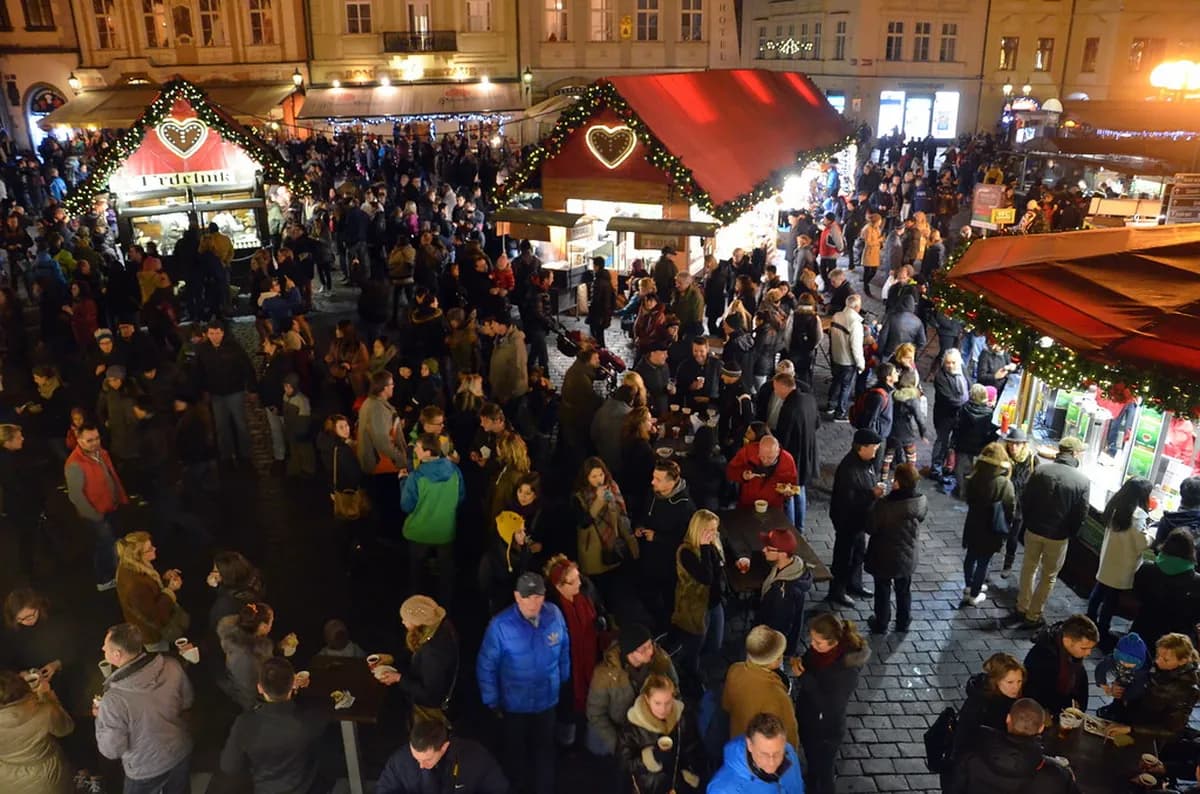
Prague transforms into a glowing winter wonderland when the festive stalls arrive in the historic center. The Old Town Square Christmas market Prague serves as the city's most iconic holiday destination for travelers, yet it also deserves an honest assessment: while the backdrop is undeniably magical, the experience requires strategy to avoid tourist traps and overpriced merchandise. Visitors gather under the Gothic spires of the Tyn Church to admire the massive decorated tree, but success means knowing when to visit, where to find authentic goods, and how to navigate both the crowds and the commercial reality of one of Europe's busiest festive squares.
Walking through the rows of wooden huts reveals a sensory experience of cinnamon and roasted meat. Local choirs often perform traditional Czech carols from a central stage throughout the evening. The atmosphere combines centuries of history with a warm, welcoming community spirit. However, mixed among the genuine Czech crafts are mass-produced souvenirs imported from across Europe. This guide covers everything you need to know for a perfect holiday visit—and how to tell the difference between authentic and commercial.
2026 Dates and Opening Hours for Old Town Square
The Old Town Square Christmas market runs from November 29, 2025 through January 6, 2026. Daily opening hours are 10:00 AM to 10:00 PM, with food stalls often staying open until midnight during peak season. Special holiday hours apply on key dates: Christmas Eve (December 24) closes at 2:00 PM, December 25–26 opens at noon and closes at 10:00 PM, New Year's Eve runs 10:00 AM to 3:00 PM, and January 1 opens at noon. Plan your visit knowing that weekday afternoons (especially before 4:30 PM) offer the most breathing room, while evenings and weekends transform the square into a shoulder-to-shoulder experience.
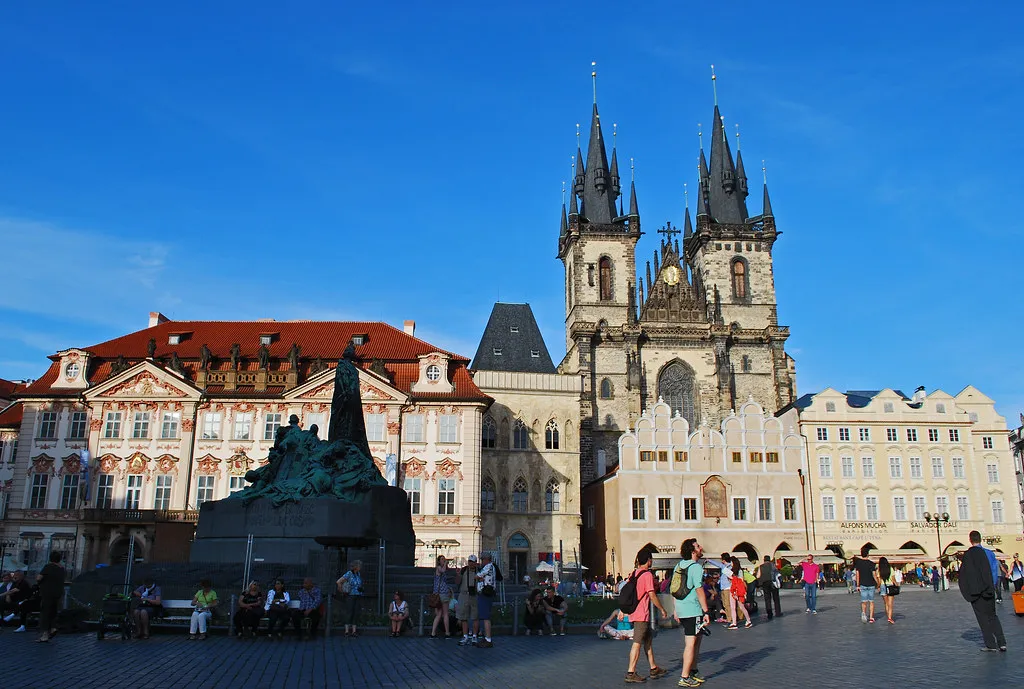
Daily tree lighting ceremonies begin at 4:30 PM and repeat hourly. The lights flicker on against the darkening sky, accompanied by a brief musical arrangement. This blue-hour moment (roughly 4:30–5:30 PM in December) is when photographers capture the square's most stunning images, and when the crowds still allow movement. Arriving by 4:00 PM ensures you secure a good viewing spot near the Jan Hus Memorial without the crush of the evening peak.
Cultural milestones shape the market rhythm. The Mikuláš celebration on December 5th brings costumed characters—angels and devils—roaming the square. St. Nicholas traditions in Czech culture date back centuries, making this date a particularly authentic moment to witness local customs. Checking the official schedule at visitczechia.com confirms any additional performances or closures that might affect your planning.
Authentic Czech Crafts vs. Mass-Produced Goods: How to Spot the Difference
The single biggest complaint from seasoned Christmas market visitors is that Prague's markets are flooded with mass-produced imports rather than genuine Czech craftsmanship. Hand-blown glass ornaments represent the pinnacle of Bohemian tradition, but you'll need to distinguish authentic pieces from factory-made copies. Real hand-blown ornaments show subtle irregularities in weight distribution, possess visible seams where the glassblower attached and removed the piece, and cost 300–600 CZK for small items. Mass-produced ornaments feel uniform, lack seams, and are priced suspiciously low (under 150 CZK). Ask vendors directly: "Is this hand-blown or machine-made?" Authentic artisans will proudly explain their technique; commercial vendors will often deflect or use vague language.
Wooden toys and hand-carved puppets are another Czech staple worth pursuing, but mass production is rampant here too. Genuine wooden marionettes show irregular grain patterns, slight variations in limb length and joint function, and are typically priced 400–1200 CZK depending on size. Look for vendors with small production setups visible nearby, or ask for the maker's name—local artisans remember their work. Factory-made puppets have uniform grain, perfect symmetry, limited joint movement, and cost under 200 CZK. The same principle applies to spinning tops, nesting dolls, and carved nativity figures.
Ceramic mugs and bowls decorated with traditional blue-and-white patterns are sold everywhere, but authentic Czech pottery (particularly Modřany and Jarčova ceramics) carries distinctive hand-painted brushwork. Genuine pieces show minor color variations and uneven glaze, cost 250–450 CZK, and often bear maker marks on the base. Mass imports have uniform color, perfect glazing, and cost under 100 CZK. Request to see the bottom of any piece before buying; Czech makers mark their work with pride.
The real red flag: booths selling identical merchandise across multiple locations. Authentic artisans occupy single stalls with unique inventory. Walk the perimeter of the square and note which vendors appear in multiple locations with identical stock—those are wholesale operations. The smaller huts positioned further from the central stage, away from main foot traffic, are more likely to house genuine creators who rely on quality reputation rather than volume foot traffic.
Culinary Delights and Traditional Czech Foods
Savoring the local street food is an essential part of the Old Town Square experience, and unlike merchandise, the food quality remains genuinely good even in the tourist center. Traditional Pražská Šunka (Prague ham) is cooked on rotating spits over open fires. Beware the price-per-100-gram trap: vendors will sell you 200–300 grams without asking, resulting in inflated bills. Always specify your desired weight in grams upfront. Expect to pay 400–600 CZK for a hearty serving. The meat is smoky, tender, and worth the cost when purchased mindfully.
Trdelník (chimney cakes) are cinnamon-sugar pastries grilled over coals and often filled with chocolate or hot fruit compote. At 80–120 CZK, they offer authentic Czech flavor and are universally beloved. Halusky (potato dumplings with bacon and sour cream) are savory comfort food sold by weight, typically 150–200 CZK for a satisfying portion. Garlicky potato pancakes (bramboráky), Russian pelmeni dumplings, and langos (Hungarian fried bread with garlic and cheese) round out the hearty options.
Warm beverages deserve their own category. Svařák (mulled wine) costs 70–90 CZK per cup and remains the quintessential Christmas market drink. The recipe varies by vendor, but quality establishments use decent wine (not vinegar) and fresh spices. Medovina (hot honey wine) offers a sweeter alternative preferred by locals. Non-alcoholic options include horký most (hot apple cider) and hot chocolate. A subtle but crucial detail: beverages are served in disposable paper cups at the main markets, unlike German counterparts that offer reusable ceramic mugs. Bring your own mug if you prefer, or accept the environmental trade-off.
Navigating Crowds Like a Local: Golden Hour Strategy
The Old Town Square Christmas market reaches peak congestion around 5:00–8:00 PM on Friday through Sunday. The magical lighting and performance schedule create a vacuum pull, but also gridlock. The local strategy is counterintuitive: embrace the day visits. Afternoon slots (1:00–4:00 PM) on weekdays offer 70% fewer visitors while still providing daylight for shopping and browsing. If you want the atmospheric evening experience, arrive at 4:15 PM (before the 4:30 PM tree lighting) and leave by 5:30 PM, when waves of evening crowds surge in.
The Old Town Hall tower offers a breathtaking panoramic view above the crush. The entry fee is roughly 300 CZK, and the elevated perspective provides both stunning photos and psychological relief from the dense crowds below. Photographers should target 4:15–4:45 PM for the blue-hour light window. The Jan Hus Memorial area (toward the southeast corner) tends to have 20–30% lower density than the central stage zone.
Pro tip: locals avoid the historic center entirely during late December evenings. If you crave a more relaxed market experience with the same traditional foods and crafts, visit the Náměstí Míru (Peace Square) market instead, a 10-minute tram ride away. This neighborhood market opens earlier (November 20) and closes earlier (December 24), runs with 80% fewer tourists, and offers comparable merchandise quality at slightly lower prices. The trade-off: it lacks the iconic Gothic backdrop and formal performances of Old Town Square.
Other Prague Christmas Markets: Na Kampě, Wenceslas Square, and Beyond
Prague hosts twelve official Christmas markets across the city. The Old Town Square and Wenceslas Square are the most touristed, but understanding the alternatives helps you allocate limited time. Wenceslas Square runs the same dates (November 29, 2025 – January 6, 2026) with identical hours and similar merchandise. The advantage: it sits further from the main tourist convergence point and feels slightly less chaotic, though still busy. Ice skating occurs in the square's center, adding a family-friendly element absent at Old Town.
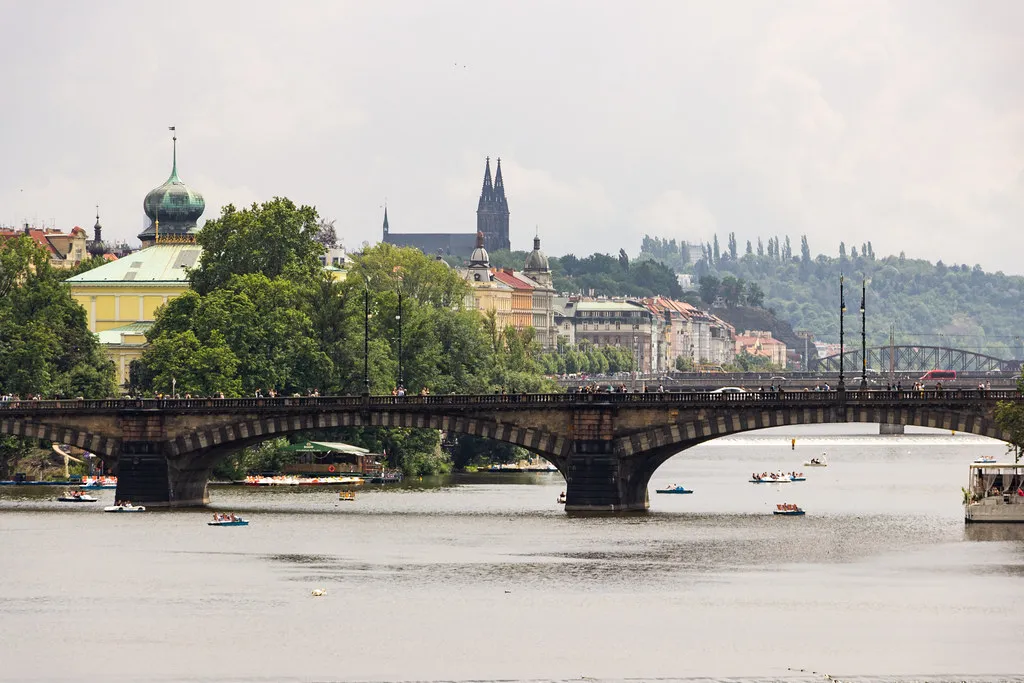
Na Kampě Christmas Market occupies the picturesque island between Charles Bridge and the Vltava river. Running December 3, 2025 – January 4, 2026, with 10:00 AM–8:00 PM hours, this market offers riverside charm and fewer crowds. However, the stall density is noticeably lower—expect roughly 30–40 booths instead of 100+. Locals love this market for its character, though serious shoppers will find limited selection.
Náměstí Míru (Peace Square) market deserves its own section. Operating November 20 – December 24 (earlier and shorter than Old Town), 10:00 AM–8:00 PM, this neighborhood gem sits in front of the Church of St. Ludmila in Prague 2. The crowd composition skews heavily local, prices are slightly lower, and authenticity feels higher. Smaller vendors occupy individual stalls rather than franchise operations. If you want to experience a Christmas market the way Praguers actually do—avoiding the tourist circuit—this is your destination. The trade-off: no iconic Gothic backdrop and closing in late December.
Republic Square (Náměstí Republiky) hosts two separate markets: one at V Celnici (November 25 – December 24, 10:00 AM–8:00 PM) and another in front of Palladium (November 28, 2025 – January 7, 2026). Both offer good gift selection and food options with moderate crowds. Tyl Square (Tylovo náměstí), a short walk from Peace Square, focuses heavily on food stalls and runs November 26 – December 24. Mariánské Square (November 29, 2025 – January 6, 2026) offers another local-feeling option with traditional crafts and fewer tourists.
Is It Worth Visiting? An Honest Assessment
After visiting dozens of Christmas markets across Germany, Austria, and Scandinavia, the consensus among experienced holiday travelers is nuanced: Prague's Christmas markets are not among Europe's best for merchandise variety or artisan density, but they are absolutely worth visiting for the city itself. The Old Town Square backdrop—those Gothic spires, the ancient astronomical clock, the centuries-old architecture—elevates an ordinary market experience into something genuinely magical. Many visitors report that the setting alone justifies the trip, even if the merchandise disappoints.
The commercial reality: expect repetitive stalls selling identical mass-produced goods, particularly in the main squares. Items like souvenir tins, machine-made scarves, plastic ornaments, and imported decorations vastly outnumber genuine Czech crafts in the central markets. Trdelník has become so ubiquitous and touristy that even Czech food writers call it a "tourist trap pastry," despite its genuine origins. Mulled wine and grilled meats, however, remain authentically good across all locations.
The verdict depends on your travel goals. If you're visiting Prague in winter anyway—and you should, because the city is stunning—the Christmas markets add festive atmosphere and reliable food options. Block 2–3 hours for Old Town Square, visit weekday afternoons, skip the mass-produced merchandise, eat well, and move on to other Prague attractions. Don't make the markets the focus of your trip; make Prague the focus and let the markets enhance it. If you're traveling specifically for the "authentic Christmas market experience," consider Vienna (4 hours by train) instead, which hosts consistently higher-quality artisan markets across multiple squares.
Winter Packing Essentials for Prague's Markets
Prague's cobblestone streets and dampness create unique cold conditions. A standard winter coat is insufficient; layering is essential. Start with merino wool base layers (breathable and odor-resistant even after days of wear). Add thermal leggings under jeans, then a cozy down jacket. A waterproof coat with a hood handles Prague's frequent drizzle better than an umbrella, which proves useless on crowded market stalls. Insulated boots with good grip are mandatory—cobblestones become treacherous when wet or icy. Quality merino wool socks (not cotton) prevent the foot pain that typically derails market visits.
Practical gear often overlooked: a portable phone charger (cold drains batteries 40–50% faster), phone-compatible gloves so you can navigate while staying warm, and packing cubes for organizing multiple layers if you're staying in a small room. A universal adapter powers electronics in Czech outlets (220V). Most importantly, carry a small backpack or cross-body bag rather than large luggage—market crowds make large bags cumbersome and theft-prone.
Payment logistics: ATMs and card payments (including contactless) work at larger stall clusters, but smaller artisan stands often demand cash. Carry 1000–1500 CZK in small bills for purchases under 200 CZK. Larger purchases (crafts, multiple food items) can use cards without issue at established vendor stalls. Czech currency (koruna) cannot be exchanged at all foreign banks, so convert before arriving or use ATMs in Prague.
Beyond Christmas Markets: Other Prague Winter Attractions
Making the Christmas markets your sole focus will likely lead to disappointment. Prague offers abundant winter attractions that pair well with a market visit. St. Vitus Cathedral and Prague Castle demand a full morning or afternoon. The Charles Bridge is stunning in winter light, and locals recommend timing your crossing for 4:00 PM to see the daily lamplighter ceremony—a charming tradition few tourists witness.
Lumina Park features elaborate light installations throughout December, providing the visual magic some visitors seek but don't find in crowded markets. The Bethlehem Chapel nativity exhibit displays diverse nativities from around the world, offering cultural insight beyond Christmas market kitsch. The Old Town Astronomical Clock draws crowds every hour, and the adjacent streets contain excellent cafés for warming up between activities.
A practical 48-hour Prague itinerary: Day 1 morning visit Old Town Square market (weekday, 1:00–3:00 PM slot) for food and atmosphere, then St. Vitus Cathedral. Day 1 evening walk Charles Bridge and explore the Jewish Quarter. Day 2 morning visit Náměstí Míru market for authentic experience and local goods. Day 2 afternoon visit Lumina Park or a second neighborhood market (Tyl Square or Republic Square) if interested. This spreads market time across the trip rather than concentrating it, preventing fatigue from crowds and repetitive merchandise.
Frequently Asked Questions
Is the Old Town Square Christmas market Prague free to enter?
Yes, entry to the market is entirely free for all visitors. You only need to pay for the food, drinks, and craft items you choose to purchase. Some nearby attractions like the Old Town Hall tower require a separate admission fee for entry.
What are the typical opening hours for the stalls?
The craft and gift stalls generally operate from 10:00 AM to 10:00 PM daily. Food and drink stands often stay open until midnight to accommodate the evening crowds. These hours remain consistent even on major holidays like Christmas Eve and New Year's Day.
Can I use credit cards at the market stalls?
Most major vendors and food stalls now accept contactless credit card payments for convenience. However, carrying some Czech Koruna (CZK) is recommended for very small purchases or at smaller craft huts. You can find several ATMs located in the streets surrounding the main square.
When is the best time to see the Christmas tree lights?
The Christmas tree lighting ceremony occurs every hour on the half-hour, starting at 4:30 PM. The display is accompanied by a musical arrangement that lasts for several minutes. Arriving a few minutes early helps you secure a good viewing spot near the Jan Hus Memorial.
The Old Town Square Christmas market Prague offers an unforgettable backdrop for a winter holiday, combining genuine Czech traditions with authentic historic magic. Success depends on managing expectations: treat the markets as one piece of a larger Prague winter experience rather than the destination itself. Visit during the golden-hour window (4:00–5:30 PM weekdays), know how to spot authentic Czech crafts among mass-produced imports, eat the excellent traditional foods, and spend the bulk of your time exploring the city itself. Prague in winter deserves your visit; the Christmas markets deserve 2–3 hours of your time. Plan accordingly, pack warmly, and soak in the atmosphere of one of Europe's most beautiful cities during its most magical season.
 Berlin Christmas Market Dates 2026: Complete GuideApril 21, 2026
 Budapest Christmas Market Dates: 2026 Festive GuideApril 21, 2026
 Prague Christmas Market Dates 2026: Your Ultimate GuideApril 21, 2026