
Bastille Day Parade Champs Elysees: 2026 Guide
Plan your visit to the Bastille Day parade on the Champs Elysees with our expert tips. Find the best viewing spots and 2026 schedule details now.
On this page
Guide to the Bastille Day Parade on the Champs Elysees
France celebrates its national pride with a massive military parade every July 14 on the famous Champs Elysees. The event draws thousands of visitors to the heart of the capital for a grand display of power. You will see tanks, horses, and jet planes moving down the historic avenue in a perfectly timed sequence. This Bastille Day Paris 2026 guide covers everything you need for a perfect morning in the city.
Witnessing the parade in person offers a unique look at French culture and modern military traditions. Crowds begin forming hours before the sun reaches its peak over the Arc de Triomphe monument. Planning your visit requires careful attention to transport changes and security measures implemented by the local police. Our expert advice helps you navigate the busy streets to find the best possible viewing position.
History of the July 14 Military Parade
The military parade has been a tradition on the Champs Elysees since the late 19th century. It honors the storming of the Bastille and the unity of the French people through various historical eras. Soldiers from many branches of the military march in precise formations for the viewing public and the president. Watching this display helps you understand the deep historical roots of modern France and its national identity.
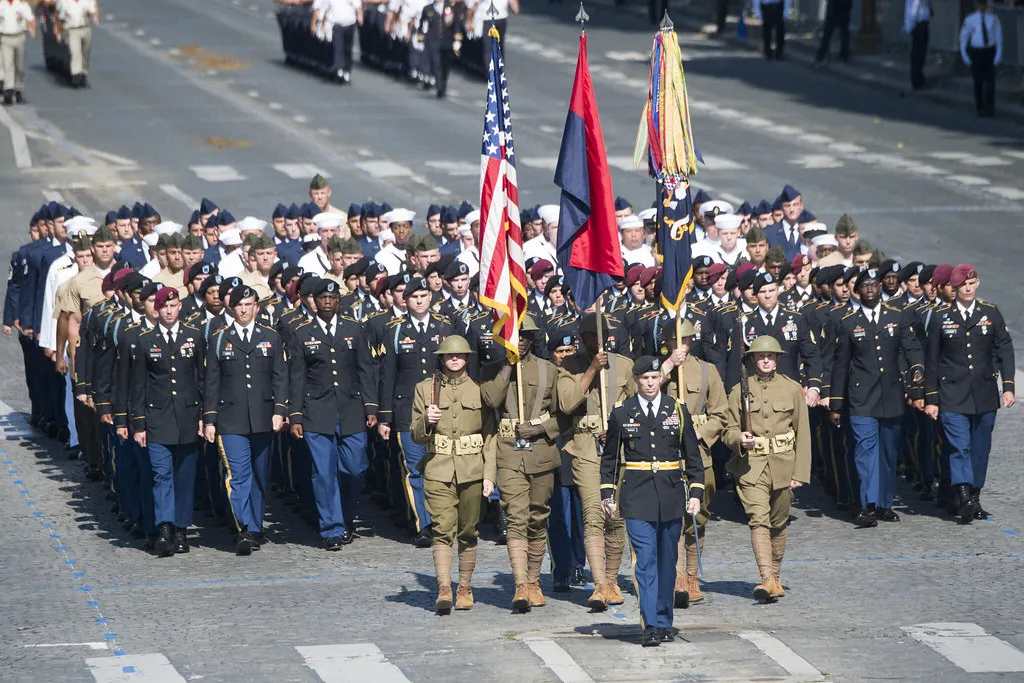
The first official parade on this avenue took place in 1880 to mark the new national holiday. Over the decades, the event has evolved to include international guests and advanced technological displays. Many visitors feel a sense of awe as the Republican Guard passes by on their majestic horses. This ceremony serves as the centerpiece of a day filled with festivities across the entire country.
The French President always leads the procession from the Arc de Triomphe down to the Place de la Concorde. This symbolic journey reinforces the connection between the government and the armed forces of the republic. Each year features a specific theme that highlights current military partnerships or significant historical anniversaries. Understanding these nuances adds a layer of depth to your experience as you watch the troops pass.
Best Viewing Spots Along the Champs Elysees
Arriving early at the Arc de Triomphe offers a clear view of the starting formation and presidential arrival. People often gather near the George V metro station for a central perspective of the long avenue. If you want to see the final salute, head closer to the grand stands at Place de la Concorde. Secure your spot by 7:30 AM to avoid being stuck behind several rows of other eager spectators.
The upper section of the avenue provides excellent views of the ground vehicles as they begin their descent. Lower sections near the gardens offer a bit more shade but may have restricted access due to VIP seating. Check the official maps released in early July to see which areas are open to the general public. Positioning yourself near a large screen can help you see the details of the ceremony from a distance.
- The Arc de Triomphe Upper Section
- View: Starting formations
- Arrival: By 7:00 AM
- Crowds: Very high density
- Access: Charles de Gaulle station
- George V Central Avenue Area
- View: Ground and air
- Arrival: By 7:30 AM
- Crowds: Moderate to high
- Access: Side street walking
- Franklin D. Roosevelt Garden Zone
- View: Lower avenue parade
- Arrival: By 8:00 AM
- Crowds: High near stands
- Access: Saint-Philippe station
Essential Logistics for Parade Day
Most metro stations along the main avenue close by 8:00 AM for safety and crowd control reasons. Travelers should use stations like Saint-Philippe-du-Roule to access the viewing areas on foot from the north. Walking from the 16th arrondissement provides a less crowded approach to the upper section of the avenue. Plan for at least thirty minutes of extra travel time due to heavy foot traffic in the 8th district.
Security checkpoints are mandatory for everyone entering the main viewing zones along the historic parade route. Expect to have your bags searched and to pass through metal detectors at various entry points. Prohibited items include glass bottles, large umbrellas, and any objects that could be used as weapons. Keeping your identification ready will speed up the process as you move through the gated security lines.
Bringing a small bottle of water is wise as July temperatures in Paris often reach 28 degrees Celsius. Sunscreen and a hat are essential for those standing in the direct sun for several hours. Cafes along the route will be extremely busy and may have limited seating during the morning hours. Many locals suggest packing a light snack to maintain your energy until the ceremony concludes at noon.
Common Mistakes to Avoid in Paris
Many tourists forget to look up for the Patrouille de France flyover which starts at 10:00 AM sharp. This aerial display is a highlight and happens very quickly over the top of the Arc de Triomphe. Do not bring large backpacks because security officers will likely turn you away at the entry gates. Booking your Paris Bastille Day accommodation late can result in very high prices and limited choices.
Standing near the very back of the crowd makes it difficult to see the ground vehicles and horses. Try to find a spot near a metal barricade to ensure you have a clear line of sight. Ignoring the official transport announcements can lead to being stranded far from your intended viewing location. Remember that the parade is just the start of the day before the Bastille Day fireworks begin.
Assuming that all shops and museums are open as usual is a common error for first-time visitors. Many businesses close their doors or change their hours to allow employees to enjoy the national holiday. Check the specific opening times for major attractions if you plan to visit them after the parade ends. Staying flexible with your schedule allows you to enjoy the spontaneous street parties that often follow the event.
Schedule and Timing for the 2026 Event
The official ceremony usually begins when the French President arrives at the avenue at 10:00 AM. A spectacular aerial display leaves trails of blue, white, and red smoke over the famous city skyline. Ground troops follow the flyover and march down the street until approximately 12:00 PM in the afternoon. Check the France event schedule for any last-minute changes to the route or the specific timing.

Military bands provide a rhythmic backdrop as different regiments showcase their uniforms and specialized equipment. Foreign military units are often invited to participate as a sign of international cooperation and friendship. The parade concludes with a final salute at the Place de la Concorde before the crowds begin to disperse. Most people head toward nearby parks or restaurants to continue their celebrations with a traditional French lunch.
Evening events often include public dances known as Bals des Pompiers held at local fire stations. These parties start around 9:00 PM and offer a festive atmosphere for both locals and tourists alike. Planning your day to include both the morning parade and evening dance provides a full cultural experience. Make sure to rest in the afternoon so you have enough energy for the late-night firework displays.
Frequently Asked Questions
What time should I arrive for the Bastille Day parade?
You should arrive at the Champs Elysees by 7:30 AM to secure a good viewing spot. Security checkpoints open early and the crowds become very dense by 9:00 AM. Early arrival ensures you can see the presidential procession and the aerial flyover clearly.
Is the Bastille Day parade free to watch?
Yes, the military parade is free for the general public to watch from the sidewalks along the avenue. You do not need a ticket unless you are sitting in the reserved grandstands at the Place de la Concorde. Most visitors simply find a spot behind the metal barriers.
Are metro stations open during the parade?
Many metro stations like George V and Franklin D. Roosevelt close early on July 14 for security. You should check the RATP website for the latest updates on station closures. Using stations a few blocks away and walking is the most reliable way to reach the parade.
What happens after the parade on the Champs Elysees?
After the parade ends around noon, the avenue often remains closed to cars for a short period. People gather in cafes or visit nearby parks for picnics and celebrations. You can find more details in our Bastille Day Paris 2026 guide for afternoon activities.
The Bastille Day parade on the Champs Elysees is a bucket-list experience for any traveler visiting France. Seeing the military precision and national pride firsthand creates memories that last a lifetime. Proper planning and early arrival are the keys to enjoying the event without unnecessary stress. Prepare for a day of excitement and celebrate the spirit of the French Republic in style.
 Bastille Day Fireworks Paris 2026: Best Viewing GuideApril 21, 2026
 Bastille Day Paris 2026: The Ultimate Travel GuideApril 21, 2026
 Cannes 2026 Lineup: Predicting Festival HighlightsApril 21, 2026